


aug. . 27, 2025 11:00 Înapoi la listă
Understanding the Bolt Industry
When it comes to infrastructure, machinery, or construction, everything hinges—quite literally—on the bolts. A reliable bolt manufacturer is the starting point for strength, precision, and safety in any project. With increasing demand for industrial-grade fasteners, choosing a bolt manufacturer who adheres to strict quality standards can make a substantial difference in long-term performance and structural integrity.
High-quality bolt manufacturers employ advanced manufacturing techniques such as cold forging, heat treatment, and CNC machining to create bolts that meet or exceed global standards like ASTM, DIN, and ISO. These manufacturers invest in metallurgical expertise to ensure each bolt’s mechanical properties are optimized for its intended application—be it high-tensile bolts for bridges or corrosion-resistant bolts for marine equipment.
Working with an established bolt manufacturer also offers logistical and design advantages. Many suppliers offer customization based on threading, material, coating, and size. From small batches for prototypes to bulk orders for ongoing projects, a reputable bolt manufacturer supports scalability while maintaining quality.
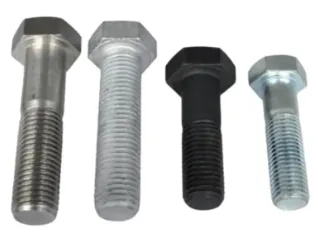
Understanding Bolt Prices: What Affects Cost in Today’s Market
With raw material volatility, logistics challenges, and global demand fluctuations, bolt prices can vary significantly. Whether you're sourcing fasteners for industrial or commercial use, understanding what drives bolt prices can help you budget accurately and choose the best value.
Several factors influence bolt prices. The first is material—stainless steel, carbon steel, and alloy bolts all come with different price tags. Stainless steel, while more expensive, offers durability and corrosion resistance. In contrast, carbon steel bolts are more affordable and sufficient for many indoor or dry-environment applications.
The second price driver is bolt type and size. Standard hex bolts or lag bolts cost less compared to specialty fasteners like eye bolts or roller chain anchor bolts that require precision engineering. Customization such as threading length, coating (zinc, galvanized, phosphate), and heat treatment also increases cost.
Lastly, order volume plays a major role. Buying in bulk can reduce bolt prices significantly due to economies of scale. That’s why many buyers turn to wholesale bolts suppliers to save on both unit costs and shipping fees.
Why Wholesale Bolts Are the Smart Choice for Contractors and Manufacturers
For high-volume users such as construction firms, industrial manufacturers, and MRO operations, purchasing wholesale bolts makes both logistical and financial sense. Sourcing fasteners in large quantities not only reduces unit costs but also ensures a steady inventory that minimizes downtime.
Wholesale bolts suppliers often work directly with manufacturers, offering a wide selection of bolt types, grades, and sizes. Whether you're looking for hex bolts, carriage bolts, flange bolts, or even specialty fasteners, wholesale bolts provide consistency in supply and quality. Many distributors also offer packaging, labeling, and delivery solutions to match your operational needs.
One major advantage of buying wholesale bolts is access to technical support. Trusted suppliers typically have experienced teams who can guide you on choosing the right bolt material, grade, and coating for your specific application—be it automotive, energy, aerospace, or civil construction.
Additionally, wholesale bolts are often bundled with accessories like washers, nuts, and anchors. This one-stop solution approach reduces sourcing complexity and ensures compatibility between fasteners and other components, helping streamline assembly or construction processes.
Exploring the Versatility of the Roller Chain Anchor Bolt
Among the many specialized fasteners available today, the roller chain anchor bolt stands out for its unique function. Used to secure roller chains—commonly found in conveyors, industrial drives, and agricultural machinery—this bolt ensures precise alignment and tension retention, critical to machine performance and durability.
A roller chain anchor bolt is typically engineered with a flanged or special head design to keep the roller chain locked in place. These bolts are often made from high-strength alloy or stainless steel to resist vibration, heat, and corrosion. Applications span industries such as food processing, mining, and packaging, where continuous operation is key.
The engineering behind a roller chain anchor bolt emphasizes mechanical grip and alignment. Improper tension or misalignment in roller chains can lead to rapid wear, slippage, or catastrophic failure. That’s why these bolts are designed not only to hold but to withstand rotational and axial loads over time.
Sourcing high-quality roller chain anchor bolts means ensuring compatibility with chain pitch and link dimensions. Many suppliers offer these bolts with options for locking mechanisms, such as nylon inserts or lock washers, to prevent loosening under repetitive motion or impact forces.
From Bolt Manufacturer to Final Application: Sourcing the Right Bolt Makes All the Difference
From the drawing board to the production floor, every component of your system matters—but none more silently than the bolt. Whether you’re working with a bolt manufacturer to design custom fasteners, managing your budget through efficient bolt prices, optimizing procurement with wholesale bolts, or relying on a roller chain anchor bolt to keep your machinery running, the choices you make ripple throughout your operation.
A strong partnership with a trustworthy bolt manufacturer provides consistency and quality control. Understanding bolt prices helps you budget wisely and avoid overpaying for features you don’t need. Engaging with wholesale bolts suppliers ensures you're never caught off guard by inventory shortages. And integrating the right roller chain anchor bolt keeps high-speed systems operating efficiently and safely.
Ultimately, fasteners might be small, but they hold everything together—literally. In industries where performance, safety, and efficiency are non-negotiable, investing time into understanding your bolt options pays long-term dividends.
roller chain anchor bolt FAQs
What should I look for in a reliable bolt manufacturer?
Look for certifications like ISO 9001, adherence to international standards (ASTM, DIN), and a proven track record in your industry. A good bolt manufacturer should also offer material traceability, customization options, and engineering support. The ability to provide consistent quality across batches is essential for high-stakes projects.
Why do bolt prices vary so much between suppliers?
Bolt prices are influenced by material type, production method, coating, customization, and order volume. Regional differences in labor, energy costs, and logistics also play a role. Suppliers who manufacture in-house may offer better pricing control compared to those who outsource production. Always compare specifications, not just cost, when evaluating suppliers.
Is buying wholesale bolts suitable for small businesses?
Yes, small businesses can benefit from wholesale bolts if they have steady demand or multiple projects planned. Buying in bulk reduces per-unit costs, ensures supply reliability, and often comes with added services like packaging and shipping support. Even moderate-volume users can save significantly with the right distributor.
Where are roller chain anchor bolts most commonly used?
Roller chain anchor bolts are typically used in conveyor systems, agricultural machinery, food processing lines, and any application involving chain drives. These bolts ensure the chain remains properly aligned and tensioned. They’re essential in high-speed, high-vibration environments where misalignment can lead to equipment failure.
Can I use a roller chain anchor bolt in place of a standard bolt?
Not typically. A roller chain anchor bolt is specifically designed to work with chain systems, offering unique head designs or locking mechanisms to secure the chain. Using a standard bolt may compromise chain stability or alignment, leading to premature wear or mechanical failure. Always match the bolt type to the application for best results.
-
Guide to Calculating the Best Expansion Anchor Bolt Length
ȘtiriApr.16,2026
-
Guide to the Correct Drill Size for 3 8 Wedge Anchor Installation
ȘtiriApr.09,2026
-
Comprehensive Guide to Dottie Wedge Anchor Selection and Installation
ȘtiriApr.07,2026
-
Comprehensive Guide to Ceiling Wedge Anchors for Secure Installations
ȘtiriApr.04,2026
-
Understanding the Versatility and Applications of Carbon Steel Wedges
ȘtiriMar.31,2026
-
The Essential Guide to Bolt Wedges Strength and Application
ȘtiriMar.28,2026
 Romanian
  Bengali
  Bulgarian
  Catalan
  Czech
Czech  English
  French
  German
  Hindi
Hindi  Hungarian
  Italian
  Kazakh
  Korean
  Portuguese
  Slovak
  Somali
  Spanish
  Turkish


