


Oct . 22, 2025 15:05 Back to list
Hex Head Sleeve Anchor – High-Load, Corrosion-Resistant
A Field Note on the Hex Head Sleeve Anchor Everyone’s Been Asking About
I’ve watched jobsite crews move from generic wedge anchors to smarter, tested fastening systems. The renewed interest in the carbon-steel, yellow-zinc version with a hex flange nut is no accident: it’s reliable, affordable, and—when installed correctly—boringly dependable. And yes, that’s a compliment.
What it is and why it matters
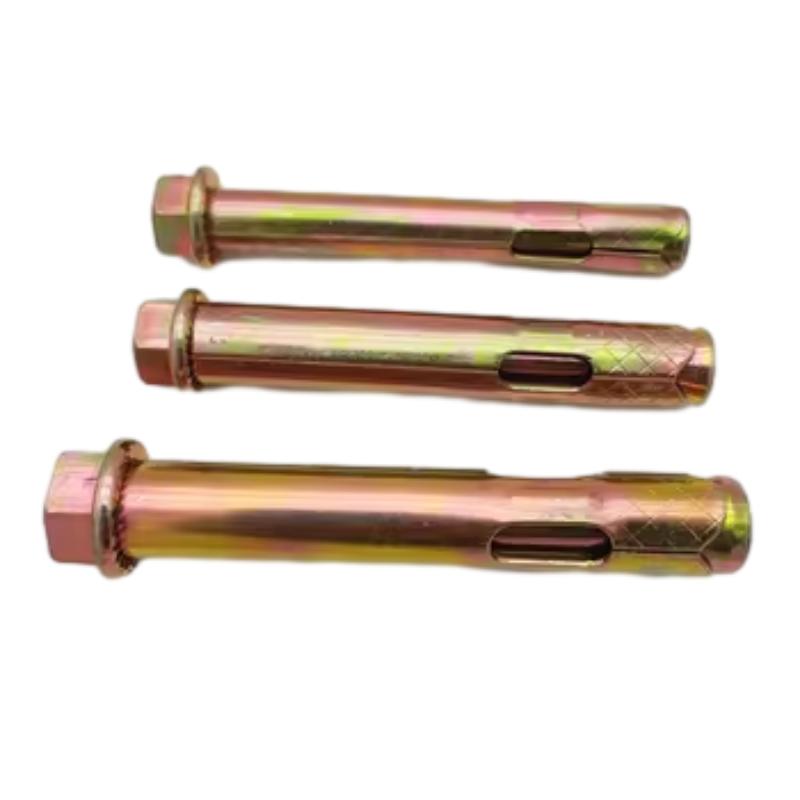
This assembly—head bolt, expansion sleeve, flat washer, expansion cone, and hex flange nut—bites into concrete using friction and mechanical interlock. In fact, crews use the Hex Head Sleeve Anchor across commercial builds, parking garages, MEP supports, racking, and even infrastructure retrofits. Many customers say they like the “forgiving” install window compared to pure chemical anchors.
Industry trends (quick scan)
- Shift toward certification-backed anchors (ICC/ETA) for code clarity.
- Seismic performance categories (C1/C2) gaining priority in specs.
- Traceability and QR-coded lots—surprisingly helpful on audits.
- Surface finishes optimized for real-world corrosion, not lab-only wins.
Key specs at a glance
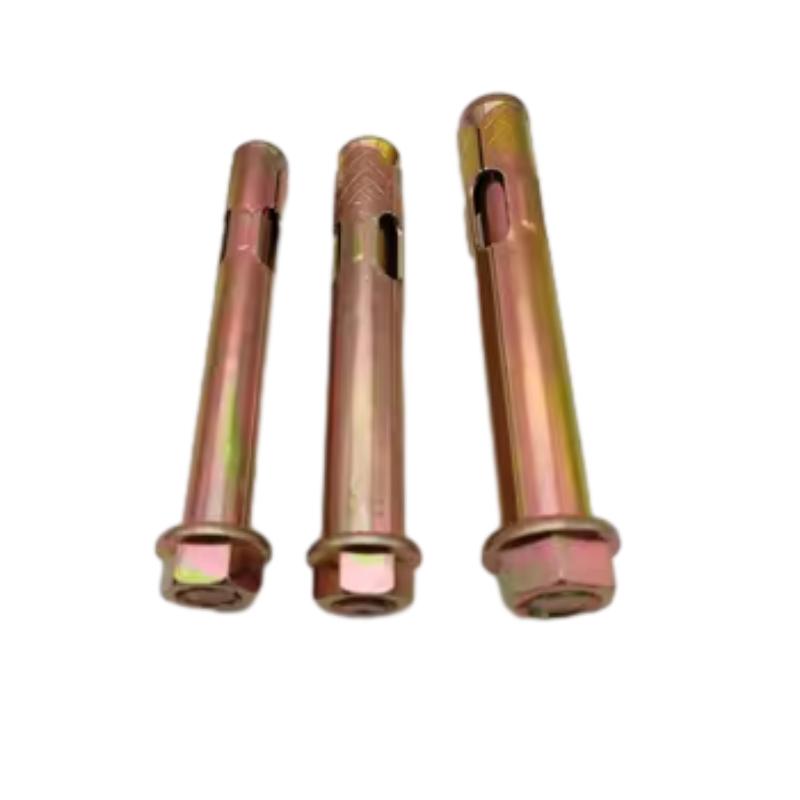
| Product | Fasteners Factory Price Carbon Steel Yellow Zinc Sleeve Anchor Hex Flange Nut |
| Material | Carbon steel (≈ Class 5.8–6.8, real-world use may vary) |
| Finish | Yellow zinc (Cr3+), ≈5–8 μm; ASTM B633 / ISO 4042 |
| Sizes | M6–M16 (lengths tailored to embedment) |
| Drill Ø / Embedment | Drill equals anchor Ø; typical embedment 40–70 mm depending on size |
| Reference testing | ASTM E488/E488M; ACI 318 Ch.17; EN 1992‑4 |
| Pull-out (indicative) | M10 in 25 MPa concrete ≈ 7–12 kN (installation and base quality dependent) |
How it’s made (process notes)
Materials are batch-certified; bolts are cold-headed, threads rolled, sleeves deep-drawn, cones precision-machined. Heat treatment as required, then Cr3+ yellow zinc plating. QC includes dimensional checks (ISO 4759), torque-tension correlation, proof-load (ISO 898-1), salt spray screening (ISO 9227), and anchor performance sampling to ASTM E488. Service life? Indoors: 10–25 years; mildly corrosive settings: shorter—consider HDG or stainless variants.
Applications, feedback, and a quick case
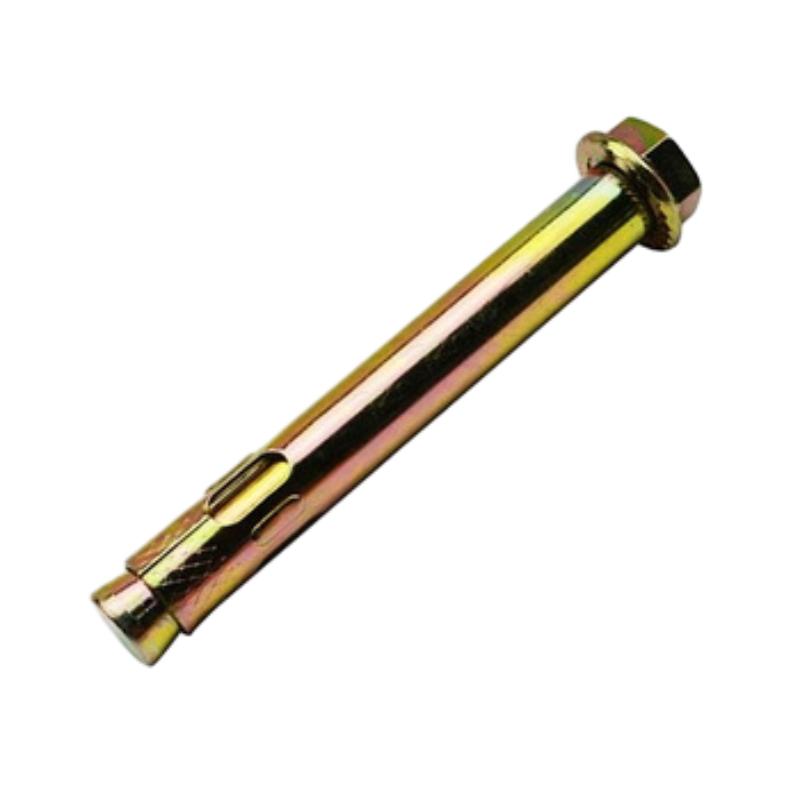
- MEP hangers, handrails, baseplates, racking, facade brackets, cable trays.
- Retrofits where edge distances are tight (check design tables, of course).
Installer notes: “Dust-out matters.” I’ve heard this a hundred times—hole brushing and blowing often gives the extra kilonewton. A parking deck retrofit in Hebei used Hex Head Sleeve Anchor M12s for inverter skids; after proper hole cleaning, first-pass tests consistently cleared design loads by ~15% (site records on file).
Vendor snapshot and customization
| Vendor | Certs | Lead time | MOQ | Customization |
|---|---|---|---|---|
| YT Bolt (Yongnian, Handan, Hebei) | ISO 9001 (typ.); material/lot certs | ≈ 10–25 days | Flexible | Size, length, plating; HDG/stainless on request |
| Global Brand A | ICC-ES/ETA options | ≈ 3–6 weeks | Higher | Extensive |
| Regional Brand B | ISO; project testing | ≈ 2–4 weeks | Medium | Moderate |
Customization: thread M6–M16, flange nut styles, plating thickness, kit packaging, laser-marked batches. For coastal or chemical exposure, consider stainless (304/316) or hot-dip galvanizing.
Install tips (because they matter)
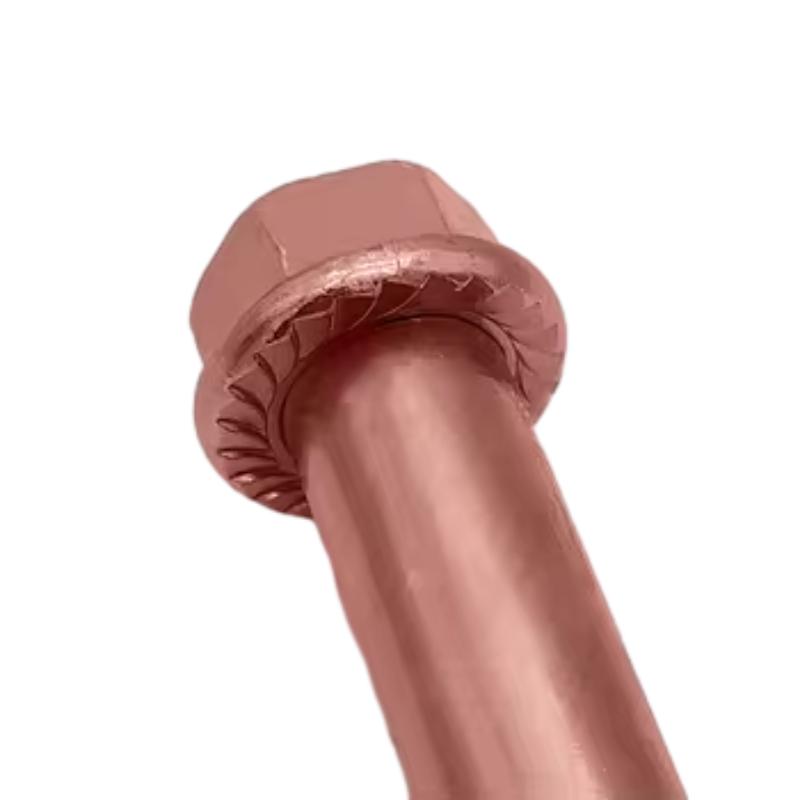
- Drill to anchor Ø and required depth; clean hole (brush + blow).
- Insert, tighten to spec torque; avoid over-torquing near edges.
- Always verify edge distance and spacing to ACI/EN rules.
Origin: No. 40, Zhuoju Road, Dongmingyang Industrial Park, Mingguan Town, Yongnian District, Handan City, Hebei Province, China.
Citations
- ACI 318-19, Building Code Requirements for Structural Concrete (Chapter 17 Anchoring).
- ASTM E488/E488M, Standard Test Methods for Strength of Anchors in Concrete.
- EN 1992-4:2018, Design of Fastenings for Use in Concrete.
- ISO 898-1:2013, Mechanical properties of fasteners.
- ISO 4042:2023, Fasteners—Electroplated coatings.
- ISO 9227:2017, Corrosion tests in artificial atmospheres—Salt spray tests.
-
Guide to Calculating the Best Expansion Anchor Bolt Length
NewsApr.16,2026
-
Guide to the Correct Drill Size for 3 8 Wedge Anchor Installation
NewsApr.09,2026
-
Comprehensive Guide to Dottie Wedge Anchor Selection and Installation
NewsApr.07,2026
-
Comprehensive Guide to Ceiling Wedge Anchors for Secure Installations
NewsApr.04,2026
-
Understanding the Versatility and Applications of Carbon Steel Wedges
NewsMar.31,2026
-
The Essential Guide to Bolt Wedges Strength and Application
NewsMar.28,2026
 English
  Bengali
  Bulgarian
  Catalan
  Czech
Czech  French
  German
  Hindi
Hindi  Hungarian
  Italian
  Kazakh
  Korean
  Portuguese
  Romanian
  Slovak
  Somali
  Spanish
  Turkish


