


Oct . 05, 2025 22:20 Back to list
Chemical Anchor Bolt with Fast Cure & High Load—Why Us?
Ceiling installers have a love–hate relationship with anchors. When you’re on the clock, you need hardware that sets fast, grips hard, and doesn’t surprise you. That’s why I’ve been watching the humble chemical anchor bolt segment evolve—especially this ceiling-focused model from Hebei. I’ve walked the yards in Yongnian District (Handan City), and to be honest, the blend of old-school forging and modern QC is better than many expect.
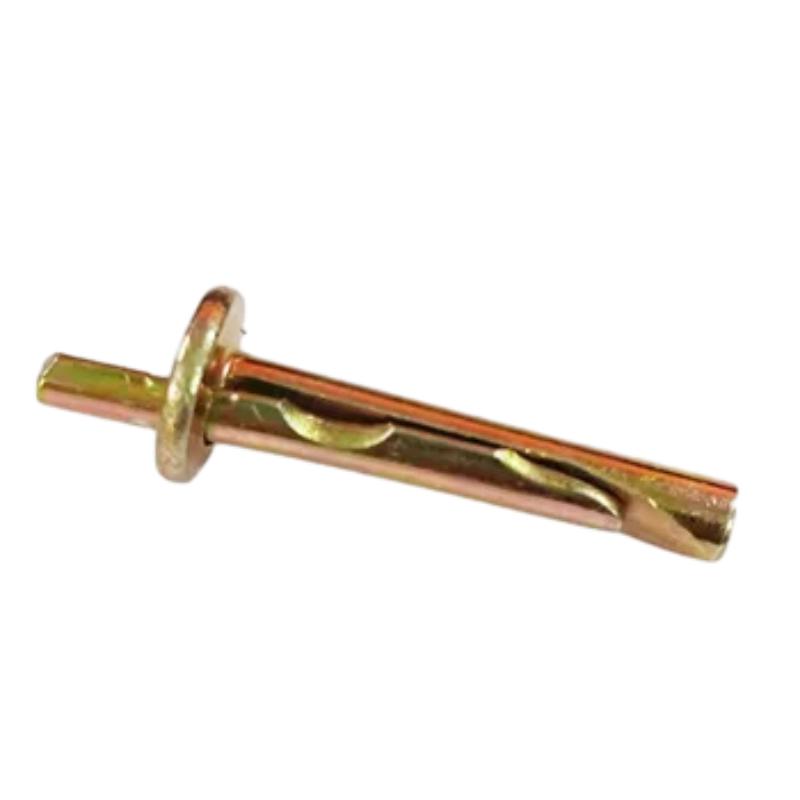
Product snapshot: chemical anchor bolt Yellow Zinc Plated Carbon Steel Ceiling Anchor—an impact-expansion through-bolt style hanger for lightweight and suspended ceilings in solid materials. No setting tool; a hammer does the trick. Works in cracked and non-cracked concrete with forgiving cavity depth and, frankly, no fussy surface cleanliness. The more embedment you choose, the higher the tension capacity—simple physics. Options in carbon steel or stainless. Factory address: No. 40, Zhuoju Road, Dongmingyang Industrial Park, Mingguan Town, Yongnian District, Handan City, Hebei Province, China.
What’s trending in anchors (and why this matters)
Three shifts: faster installs, traceable quality, and corrosion confidence. Installers tell me, “fewer steps, fewer callbacks.” This chemical anchor bolt leans hard into that: hammer set, instant load path, and predictable expansion. Meanwhile, specifiers want standards (ACI/ETA-style tests) and coatings that survive salt-spray. Yellow zinc remains popular for interiors; stainless is moving up where life-cycle costs actually matter.
Key specifications (typical, real-world use may vary)
| Base Materials | Normal-weight concrete (cracked/non-cracked), solid masonry (verify pull tests) |
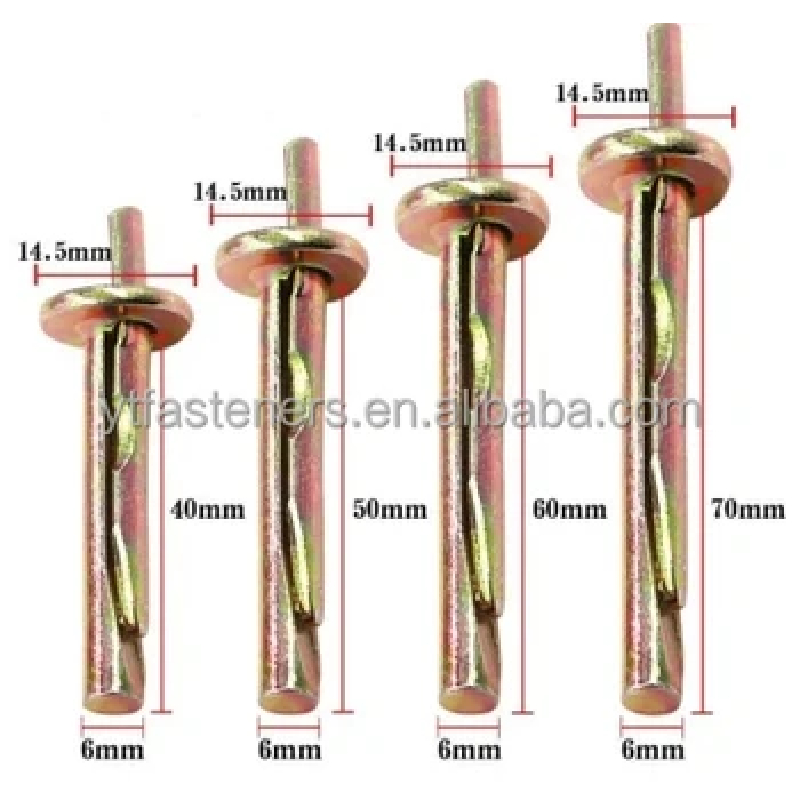
| Diameters | M6, M8, M10, M12 (others on request) |
| Materials/Finish | Carbon steel, yellow zinc plating per ≈ISO 4042; optional A2/A4 stainless |
| Tensile Capacity (indicative) | M6: ≈2.5–4.5 kN; M8: ≈6–8 kN; M10: ≈10–14 kN in C20/25 concrete, hef per datasheet |
| Service Life | Around 25–50 years interior dry; environments dictate maintenance interval |
| Standards/Testing | Internal tests to ACI 355.2-style procedures; salt spray ≈ISO 9227; steel per ISO 898-1 |
Process flow and quality
- Materials: certified carbon steel bar, wedge cones; plating line control for thickness uniformity.
- Methods: cold forming, precision threading, expansion cone pairing, yellow zinc passivation.
- Testing: batch tensile/shear, expansion verification, torque–tension checks, coating thickness, ISO 9227 spray.
- Traceability: heat/batch codes; COA available. In practice, I always ask for pull-test data on site.
Where it shines
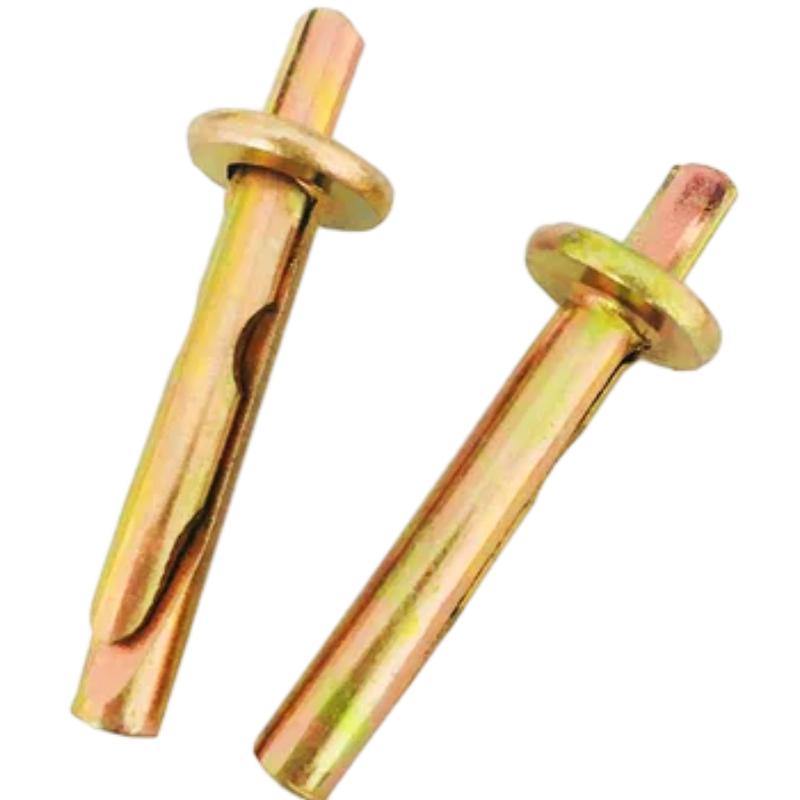
Lightweight ceiling grids, MEP hanger rods, signage, and cable trays. Installers like the “hammer-and-go” rhythm; many customers say it cuts a few seconds per point—which adds up over thousands of drops. For seismic or edge-distance tight spots, get engineering sign-off; cracked concrete performance is good but design per ACI 318 is non-negotiable.
Vendor snapshot (informal comparison)
| Vendor | Typical Strength | Certs/Docs | Lead Time | Notes |
|---|---|---|---|---|
| YT Bolt (Hebei) | ≈Mid-range; solid for ceilings | COA, in-house test reports | Around 2–4 weeks | Cost-effective; customization friendly |
| Hilti | High; ETA/ICC options | ETA/ICC-ES on many models | Stock to 1–2 weeks | Premium price, robust tech data |
| fischer | High; European focus | ETA portfolio | 1–3 weeks | Wide range, excellent guides |
Customization and support
Thread sizes (M6–M12), embedment lengths, washers/nuts, and stainless grades are flexible. Branding/packaging available for distributors. For large projects, ask for site pull tests and a project-specific submittal for the chemical anchor bolt family.
Mini case notes
- Retail fit-out, Dubai: 6,000+ ceiling drops; crew reported ≈12% time savings vs sleeve anchors.
- Food plant, Malaysia (washdown zones): switched to A4 stainless; zero corrosion findings at 18-month audit.
Standards and design notes
Design to ACI 318 anchor provisions (or Eurocode via ETA where applicable). Pull tests per ACI 355.2-style procedures help validate site conditions. For plating, check ISO 4042; for mechanical properties, ISO 898-1. If corrosion is a worry, jump to stainless or enhanced coatings; it’s cheaper than a recall, honestly.
References:
- ACI 318-19, Building Code Requirements for Structural Concrete.
- ACI 355.2-19, Qualification of Post-Installed Mechanical Anchors in Concrete.
- ISO 898-1: Mechanical properties of fasteners.
- ISO 4042 & ISO 9227: Electroplating and salt spray testing standards.
-
Guide to Calculating the Best Expansion Anchor Bolt Length
NewsApr.16,2026
-
Guide to the Correct Drill Size for 3 8 Wedge Anchor Installation
NewsApr.09,2026
-
Comprehensive Guide to Dottie Wedge Anchor Selection and Installation
NewsApr.07,2026
-
Comprehensive Guide to Ceiling Wedge Anchors for Secure Installations
NewsApr.04,2026
-
Understanding the Versatility and Applications of Carbon Steel Wedges
NewsMar.31,2026
-
The Essential Guide to Bolt Wedges Strength and Application
NewsMar.28,2026
 English
  Bengali
  Bulgarian
  Catalan
  Czech
Czech  French
  German
  Hindi
Hindi  Hungarian
  Italian
  Kazakh
  Korean
  Portuguese
  Romanian
  Slovak
  Somali
  Spanish
  Turkish


