In the world of structural integrity and heavy-duty fastening, the throughbolt stands as a cornerstone of reliability. Unlike standard screws that rely on internal threads within a component, a throughbolt passes entirely through the materials being joined, securing them with a nut and washer on the opposite side. This fundamental design ensures that the clamping force is distributed across the entire thickness of the assembly, making it indispensable for applications where safety and vibration resistance are non-negotiable.
Across global industries—from shipbuilding and bridge construction to automotive chassis assembly—the reliance on high-grade throughbolts is driven by the need for absolute mechanical stability. As infrastructure projects grow in scale and complexity, the demand for fasteners that can withstand extreme shear forces and environmental degradation has surged. Understanding the nuances of these fasteners is not just a technical requirement for engineers but a safety imperative for any project involving heavy load-bearing structures.
By prioritizing the correct material selection and torque specifications, companies can significantly extend the lifecycle of their machinery and structures. Whether utilizing stainless steel for corrosive marine environments or high-tensile alloys for aerospace applications, the strategic implementation of a throughbolt ensures that connections remain secure under the most demanding conditions, reducing maintenance costs and preventing catastrophic failures.
The Fundamental Mechanics of the Throughbolt
The primary mechanical advantage of a throughbolt lies in its ability to create a high-compression joint. By passing through the entirety of the substrate, the bolt creates a clamping force that transforms the joint into a single cohesive unit. This eliminates the risk of stripping internal threads, which is a common failure point in blind-hole fastening systems, especially when dealing with softer materials like aluminum or hardwoods.
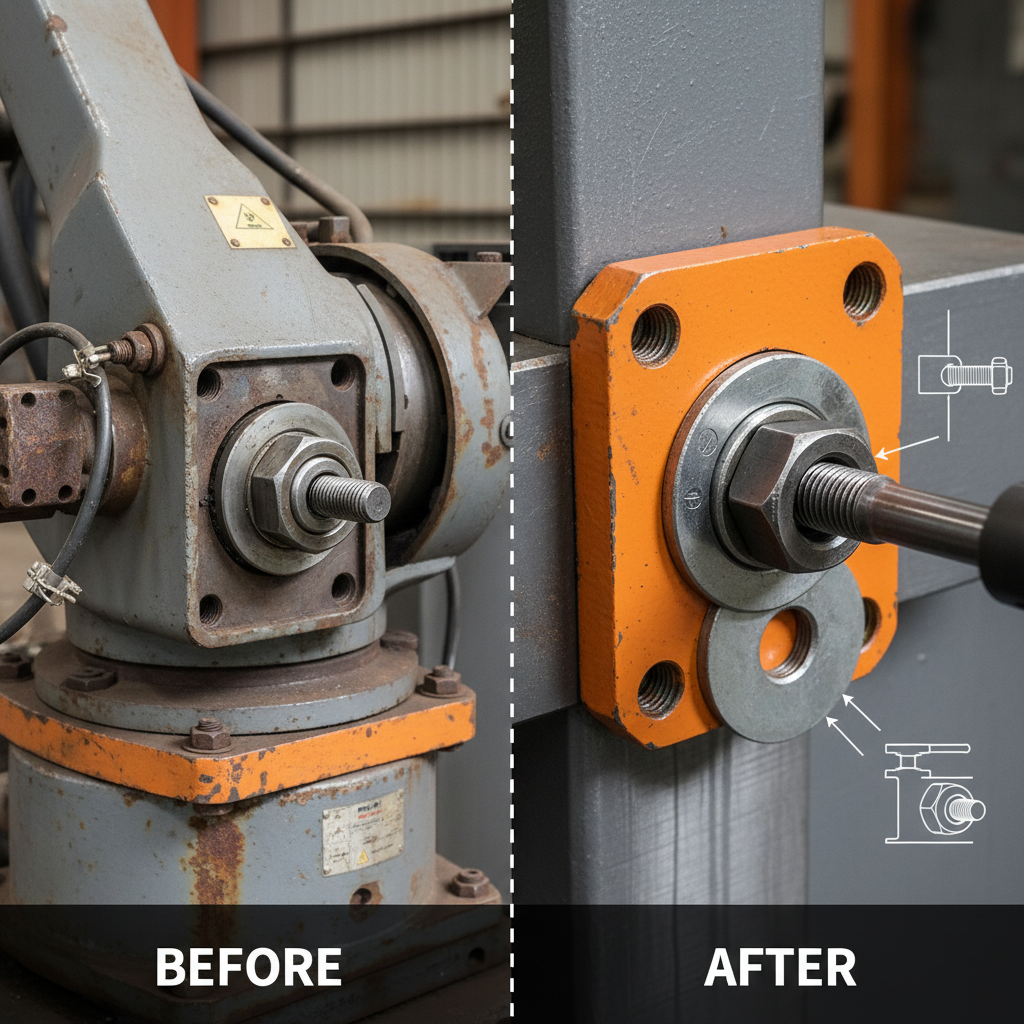
Furthermore, the use of washers in conjunction with a throughbolt is critical. Washers distribute the load of the nut over a larger surface area, preventing the bolt head or nut from sinking into the material. This distribution is essential for maintaining a constant tension across the joint, ensuring that the fastener does not loosen over time due to thermal expansion or mechanical vibration.
Material Science and Durability Standards
Selecting the right material for a throughbolt is a critical decision that impacts the longevity of the entire structure. For most industrial applications, Grade 8.8 or 10.9 carbon steel is utilized for its exceptional tensile strength. However, in environments exposed to saltwater or chemical agents, stainless steel (such as 304 or 316 grades) is the gold standard. The chromium content in stainless steel forms a passive oxide layer that protects the throughbolt from oxidation and pitting corrosion.
Beyond the base metal, surface treatments play a pivotal role in durability. Galvanization, zinc plating, and phosphate coatings are frequently applied to carbon steel throughbolts to provide an additional barrier against the elements. These coatings not only prevent rust but also reduce friction during the installation process, allowing for more precise torque application and a more consistent clamp load.
ISO and ASTM standards ensure that every throughbolt produced meets rigorous quality benchmarks. These certifications guarantee that the chemical composition, hardness, and dimensional tolerances are consistent. For engineers, these standards provide the confidence to calculate safety margins accurately, knowing that the fasteners will perform predictably under maximum rated loads.
Key Installation Factors for Maximum Security
The effectiveness of a throughbolt is heavily dependent on the precision of its installation. One of the most overlooked factors is the hole clearance; a hole that is too large can lead to shear stress on the bolt shank, while a hole that is too tight may lead to misalignment and cross-threading during the nutting process.
Proper torqueing is the heart of a secure joint. Over-tightening a throughbolt can lead to plastic deformation or "necking," where the bolt stretches beyond its elastic limit and loses its ability to maintain tension. Conversely, under-tightening allows for microscopic movements that can lead to fatigue failure. Using a calibrated torque wrench is mandatory for high-stakes industrial assemblies.
Finally, the integration of locking mechanisms—such as nylon-insert nuts or spring washers—is essential for applications subject to constant vibration. These additions ensure that the throughbolt remains tightened even when subjected to cyclic loading, which is common in automotive and aerospace sectors.
Comparative Performance Analysis of Fastening Methods
When choosing between different fastening strategies, the throughbolt often outperforms self-tapping screws or blind rivets in terms of sheer load capacity and disassemble-ability. While blind fasteners are quicker to install, they lack the raw clamping power and the ability to be easily replaced or tightened during routine maintenance.
In heavy-duty structural frames, the throughbolt method is preferred because it allows for the redistribution of loads across multiple planes. This versatility makes it the primary choice for critical joints in construction and heavy machinery, where the failure of a single fastener could lead to a systemic collapse.
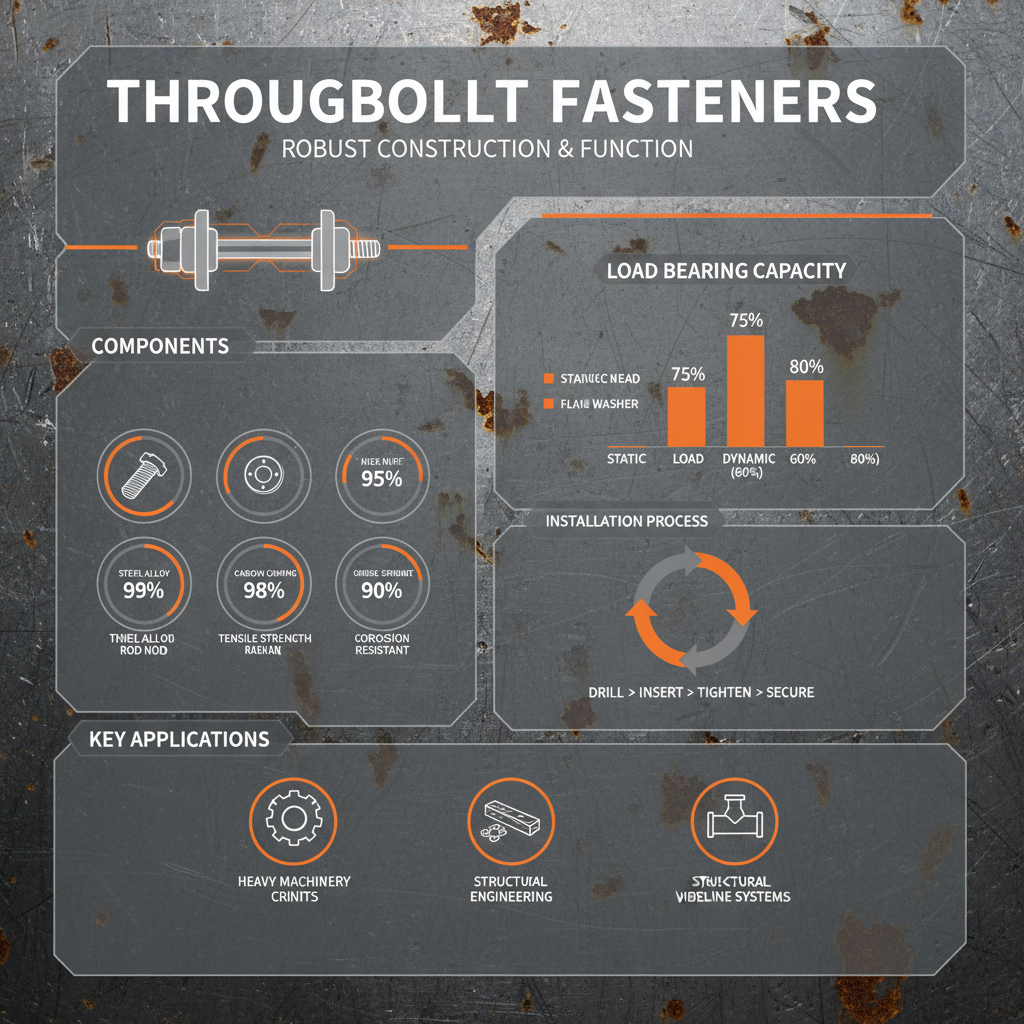
Mechanical Strength Comparison: Throughbolt vs Others
Global Industrial Applications and Use Cases
The application of the throughbolt spans nearly every continent and industry. In the maritime sector of Northern Europe, massive throughbolts are used to secure hull plates and decking, where they must resist constant salt spray and immense hydrodynamic pressure. In the energy sector, particularly in wind turbine construction, these fasteners secure the massive blades to the hub, ensuring they can withstand centrifugal forces and gale-force winds.
In remote industrial zones, such as mining operations in Australia or South America, throughbolts are used in the assembly of heavy-duty conveyor systems and crushing equipment. Because these environments are often far from specialized repair shops, the simplicity of the throughbolt—requiring only basic tools for tightening and replacement—makes it the most pragmatic choice for maintaining operational uptime.
Long-term Value and Maintenance Advantages
From a financial perspective, investing in high-quality throughbolts reduces the Total Cost of Ownership (TCO). While the initial cost of a stainless steel throughbolt may be higher than a carbon steel alternative, the elimination of frequent rust-related replacements and the reduction in labor costs for maintenance provide a significant return on investment over a 10-to-20-year cycle.
Reliability also translates to safety and trust. In public infrastructure, such as pedestrian bridges or stadium seating, the use of throughbolts ensures that the structure remains rigid and safe for thousands of users. The psychological peace of mind that comes from knowing a joint is secured "all the way through" is an intangible but vital value in civil engineering.
Furthermore, the sustainability of the throughbolt is evident in its recyclability. Unlike adhesives or permanent welds, a throughbolt can be removed at the end of a product's lifecycle, allowing the metal components to be separated and recycled efficiently. This aligns with the modern global push toward a circular economy and green manufacturing.
Future Innovations in Throughbolt Engineering
The future of throughbolt technology is leaning heavily toward "smart fasteners." Researchers are developing bolts embedded with micro-sensors that can monitor tension and stress in real-time. These smart throughbolts could transmit data to a central monitoring system, alerting engineers to a loosening bolt before it leads to a structural failure, effectively moving maintenance from a reactive to a predictive model.
Material innovation is also accelerating, with the introduction of titanium alloys and carbon-fiber reinforced polymers for specialized throughbolts. These materials offer an incredible strength-to-weight ratio, which is crucial for the next generation of electric vehicles (EVs) and aerospace craft where reducing weight directly translates to increased energy efficiency and range.
Additionally, the integration of automation in the manufacturing of throughbolts—utilizing AI-driven quality control—is reducing defect rates to near-zero. This ensures that every single fastener produced is identical in strength and dimension, facilitating the move toward fully automated robotic assembly lines in the automotive and electronics industries.
Comparative Analysis of Throughbolt Materials and Applications
| Material Type |
Corrosion Resistance |
Tensile Strength |
Primary Use Case |
| Carbon Steel (Gr 8.8) |
Low (needs coating) |
High |
General Machinery |
| Alloy Steel (Gr 10.9) |
Moderate |
Very High |
Heavy Structural Frames |
| Stainless Steel 304 |
High |
Moderate |
Food & Medical Equip. |
| Stainless Steel 316 |
Very High |
Moderate |
Marine Environments |
| Titanium Alloy |
Excellent |
Extreme |
Aerospace/Racing |
| Galvanized Steel |
Moderate-High |
High |
Outdoor Infrastructure |
FAQS
The primary difference is how they are secured. A standard bolt often threads into a pre-tapped hole in a component. A throughbolt, however, passes completely through all joined parts and is secured by a nut and washer on the opposite end. This allows the throughbolt to provide much higher clamping force and eliminates the risk of stripping internal threads in the workpiece.
Selection depends on the load and environment. For high-strength structural needs, choose Grade 8.8 or 10.9 alloy steel. If the project is exposed to moisture or chemicals, stainless steel 304 or 316 is preferred. Always refer to the tensile strength requirements of your engineering blueprints and consider whether a protective coating like galvanization is necessary for rust prevention.
Yes, absolutely. Over-tightening can lead to "bolt stretch" or plastic deformation, where the metal permanently elongates. This actually reduces the bolt's ability to hold tension and can lead to sudden snapping under load. It is highly recommended to use a calibrated torque wrench to meet the specific Newton-meter (Nm) requirements for the bolt's grade and diameter.
While not strictly mandatory for every single application, washers are strongly recommended. They distribute the pressure of the nut and bolt head across a wider surface area, which prevents the fastener from crushing or digging into the material. This is especially critical when working with wood, plastic, or softer metals like aluminum to ensure a stable, long-term connection.
There are several professional methods: using nylon-insert lock nuts (Nyloc), applying a medium-strength thread-locking compound (like Loctite), or using spring lock washers. In extreme cases, a cotter pin and castle nut combination can be used to mechanically prevent the nut from turning, ensuring the joint remains secure regardless of the vibration levels.
Not necessarily. While stainless steel offers superior corrosion resistance, it generally has lower tensile strength than high-grade alloy steel. If your project requires extreme load-bearing capacity in a moderately corrosive environment, hot-dip galvanized high-tensile steel is often the better choice. Stainless steel is best for aesthetics and extreme chemical/saltwater exposure.
Conclusion
The throughbolt remains an irreplaceable element of modern engineering, providing a level of security and structural stability that few other fasteners can match. From the critical selection of material grades to the precision of torque application, every detail in the implementation of a throughbolt contributes to the safety and longevity of the final assembly. By balancing strength, corrosion resistance, and maintenance accessibility, industries can build infrastructure that is not only durable but also sustainable for future generations.
Looking forward, the integration of smart monitoring and advanced alloys will continue to elevate the throughbolt from a simple mechanical component to an intelligent part of a structural health monitoring system. We encourage engineers and procurement managers to prioritize quality and adherence to international standards to ensure the highest safety margins in their projects. For premium fastening solutions and expert guidance, visit our website: www.ytbolt.com




 English
  Bengali
  Bulgarian
  Catalan
  Czech
Czech  French
  German
  Hindi
Hindi  Hungarian
  Italian
  Kazakh
  Korean
  Portuguese
  Romanian
  Slovak
  Somali
  Spanish
  Turkish