


Apr . 09, 2026 02:15 Back to list
Guide to the Correct Drill Size for 3 8 Wedge Anchor Installation
Mastering the Drill Size for 3/8 Wedge Anchor Installation
Achieving a secure hold in concrete requires precision, and the most critical factor is selecting the correct drill size for 3/8 wedge anchor. A hole that is too large will lead to a loose fit and potential failure, while a hole that is too small will make the anchor impossible to drive. Whether you are a professional contractor or a DIY enthusiast, understanding the relationship between the anchor diameter and the drill bit is essential for structural integrity. In this comprehensive guide, we will walk you through the exact specifications, installation tips, and common pitfalls to ensure your fastening projects are safe and durable.
The Exact Drill Size for 3/8 Wedge Anchor Application
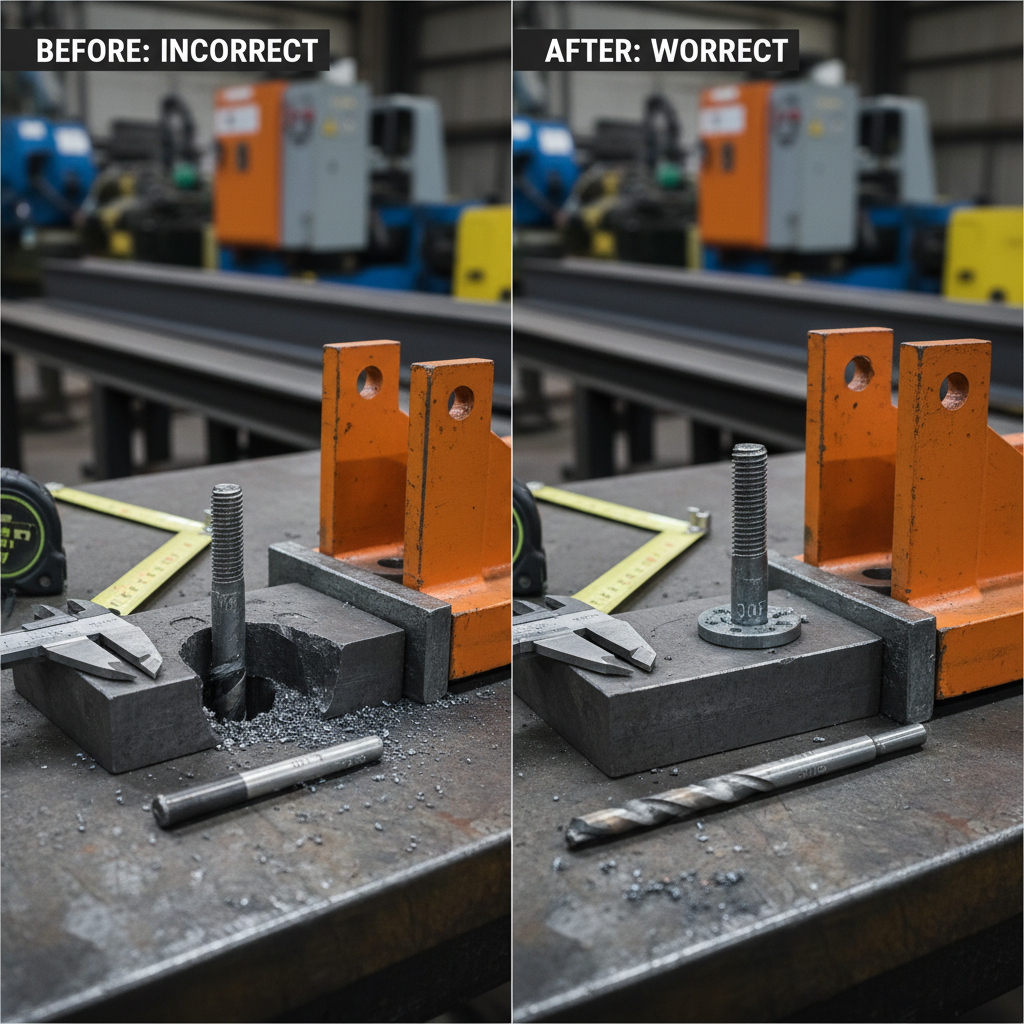
For a standard 3/8-inch wedge anchor, the industry standard is to use a 3/8-inch carbide-tipped masonry drill bit. Because wedge anchors are designed to be a "tight fit," the drill bit diameter should match the nominal diameter of the anchor. This ensures that when the nut is tightened, the expansion clip grips the concrete walls with maximum friction and tension. Using a bit larger than 3/8" will significantly compromise the load-bearing capacity of the drill size for 3/8 wedge anchor setup, potentially leading to the anchor pulling out under stress.
Pro Tip: Always check the manufacturer's specifications on the packaging. While 3/8" is the standard, some heavy-duty brands may have slight variations in tolerances that require specific bit types for optimal performance.
Comparing Wedge Anchor Sizes and Drill Requirements
It is helpful to see how the 3/8" anchor fits into the broader spectrum of fastening options. Most masonry anchors follow a 1:1 ratio between the anchor diameter and the hole size. However, the load capacities vary drastically. By understanding the drill size for 3/8 wedge anchor compared to others, you can better plan your material procurement and tool selection for the job site.
Step-by-Step Installation Using the Correct Drill Size for 3/8 Wedge Anchor
Using the correct drill size for 3/8 wedge anchor is only the first step. To ensure a professional finish, follow this sequence: First, mark your hole location clearly. Second, use a hammer drill to create a hole that is slightly deeper than the anchor will penetrate. Third, clear the dust from the hole using compressed air or a vacuum; left-over debris can prevent the anchor from seating fully. Finally, drive the anchor through the fixture into the hole using a hammer and tighten the nut to expand the wedge.
Common Mistakes Related to Drill Size for 3/8 Wedge Anchor
One of the most frequent errors is using a "standard" drill bit instead of a masonry bit. Standard bits will dull immediately against concrete and create an irregular hole shape. Another mistake is over-drilling; if the drill bit wobbles, the hole becomes slightly larger than 3/8", which ruins the friction fit. When focusing on the drill size for 3/8 wedge anchor, consistency is key. If the anchor slides in too easily without any resistance, the hole is likely too large, and you should consider a larger anchor size or a different fastening method.
Technical Specifications for 3/8" Wedge Anchors
To help engineers and project managers, we provide the technical data for 3/8" anchors. The strength of the connection depends not just on the drill size for 3/8 wedge anchor, but also on the embedment depth and the quality of the concrete (psi). Ensure that the base material is sound and free of large voids or cracks before drilling.
Best Practices for Tool Maintenance
The accuracy of your drill size for 3/8 wedge anchor depends heavily on the condition of your tools. A worn-out drill bit may not cut a perfectly circular hole, or it may "wander," creating a hole larger than 3/8". We recommend replacing masonry bits frequently during large-scale projects. Additionally, using a depth gauge on your drill ensures that every hole is uniform, preventing the anchor from protruding too far or not reaching the required depth for safety.
Conclusion: Ensuring Stability with the Right Drill Size
Selecting the correct drill size for 3/8 wedge anchor is a simple but non-negotiable step in construction safety. By using a precise 3/8" masonry bit, cleaning your holes, and following technical embedment guidelines, you ensure that your structures remain secure for years to come. For high-quality fasteners and professional-grade anchoring solutions, always trust experienced suppliers who prioritize precision and strength. Don't leave your project's stability to chance—get the sizing right every time.
Frequently Asked Questions (FAQs)
Can I use a 7/16" drill bit for a 3/8" wedge anchor?
No, you should not use a 7/16" drill bit. A 7/16" bit is larger than the nominal 3/8" diameter of the anchor. This would create a gap between the anchor's expansion clip and the concrete wall, meaning the anchor will not be able to grip the material effectively. This significantly reduces the load capacity and could lead to the anchor pulling out, creating a serious safety hazard. Always stick to the 3/8" bit for a 3/8" anchor.
What should I do if the 3/8" anchor is too hard to hammer in?
If the anchor is extremely difficult to drive in, the most common cause is dust left inside the hole. Use a can of compressed air or a vacuum to thoroughly clean the hole before attempting to insert the anchor. If the hole is clean and the anchor still won't enter, ensure you are using a true 3/8" masonry bit and that the hole is drilled deep enough. Never force an anchor in with excessive violence, as you may damage the anchor's expansion mechanism.
Do I need a hammer drill for the drill size for 3/8 wedge anchor?
Yes, a hammer drill (or an SDS drill) is strongly recommended for concrete work. A standard rotary drill cannot penetrate cured concrete efficiently and will likely burn out the drill bit. The hammering action of a hammer drill breaks the concrete while the rotation removes the debris. For a 3/8" hole, a hammer drill ensures a cleaner, more precise hole, which is critical for the anchor to function as designed. You can find more guidance on fastening tools at the YT Bolt website.
Can I use a 3/8" wedge anchor in brick or cinder block?
Wedge anchors are specifically designed for solid concrete. They should not be used in hollow cinder blocks or soft bricks because the expansion clip needs a solid wall to push against. In hollow blocks, the wedge may simply crush the thin shell of the block rather than expanding securely. For those materials, consider using sleeve anchors or chemical adhesive anchors, which are designed to grip hollow or softer masonry surfaces.
-
Guide to Calculating the Best Expansion Anchor Bolt Length
NewsApr.16,2026
-
Guide to the Correct Drill Size for 3 8 Wedge Anchor Installation
NewsApr.09,2026
-
Comprehensive Guide to Dottie Wedge Anchor Selection and Installation
NewsApr.07,2026
-
Comprehensive Guide to Ceiling Wedge Anchors for Secure Installations
NewsApr.04,2026
-
Understanding the Versatility and Applications of Carbon Steel Wedges
NewsMar.31,2026
-
The Essential Guide to Bolt Wedges Strength and Application
NewsMar.28,2026
 English
  Bengali
  Bulgarian
  Catalan
  Czech
Czech  French
  German
  Hindi
Hindi  Hungarian
  Italian
  Kazakh
  Korean
  Portuguese
  Romanian
  Slovak
  Somali
  Spanish
  Turkish


