


Oct . 18, 2025 13:10 Back to list
Hex Bolt Sleeve Anchor – Heavy‑Duty, Anti‑Rust, Fast Install
Fasteners Factory Wholesale Yellow Zinc Plated Hex Bolt Type Sleeve Anchor
If you work around concrete fixings long enough, you realize the simple things carry the job. The hex bolt sleeve anchor is one of those “does-what-it-says” staples—reliable, repeatable, and, when specified right, cost-efficient. Lately I’ve seen a steady shift back to mechanical anchors on retrofit work: fewer chemical-curing headaches, predictable installation torque, and easier inspection. Yellow zinc? Still popular for dry interior jobs where speed matters and the budget’s tight.
What it is—and how it works
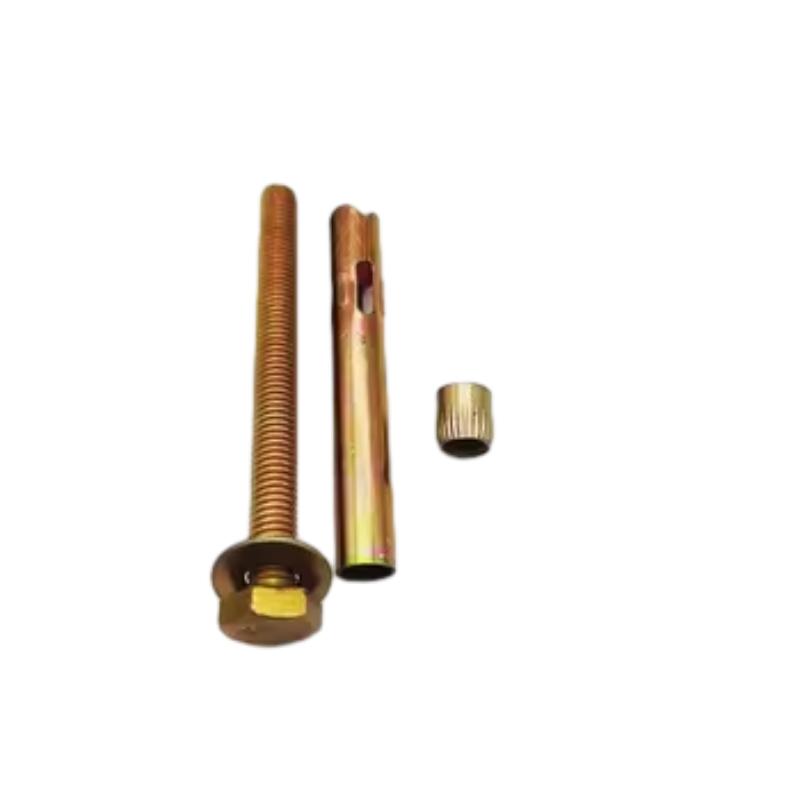
A sleeve anchor combines a head bolt, expansion tube, flat washer, expansion nut and hex nut. Tightening draws the cone into the sleeve, expanding it against the concrete wall. It’s the everyday fix for MEP supports, racking, handrails, light machinery, you name it. In fact, many customers say they prefer the hex bolt sleeve anchor on fast-paced fit-outs because the feedback at torque is obvious: you feel it set.
| Nominal size | Drill bit ≈ | Min. embed depth ≈ | Working tension load ≈ | Finish | Notes |
|---|---|---|---|---|---|
| M6 | 6 mm | 35 mm | 2.0–2.5 kN | Yellow zinc (≈5–8 μm) | Dry interior, non-structural |
| M8 | 8 mm | 40 mm | 3.5–4.5 kN | Yellow zinc | General purpose fixings |
| M10 | 10 mm | 50 mm | 5.0–6.5 kN | Yellow zinc | Light machinery, rails |
| M12 | 12 mm | 60 mm | 7.0–9.0 kN | Yellow zinc | Heavier supports |
Data from internal tests per ASTM E488/E488M on C30/37 concrete; real-world use may vary with edge distance, spacing, and base quality.
Process, materials, and testing
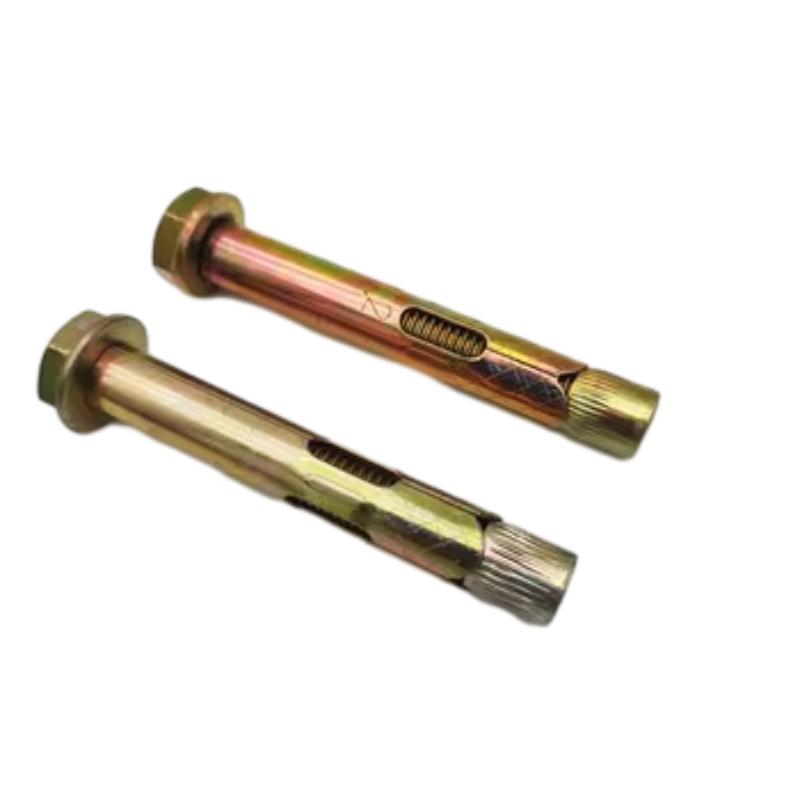
Materials: low-carbon steel (e.g., Q235/1018) for sleeve and bolt; optional higher class per ISO 898-1. Machining/cold-forming of bolt and cone, sleeve rolling, and threading. Finish: trivalent yellow zinc plating to ASTM B633 / ISO 4042, typical thickness 5–8 μm. Hydrogen relief baking used as needed. QC: proof load to ISO 898-1, torque-tension correlation, pull-out per ASTM E488, and salt-spray per ASTM B117 (96–120 h typical). Service life indoors (C1–C2, per ISO 12944) is often 3–10 years; for coastal or wet zones, pick stainless or hot-dip galvanized versions.
Where it’s used
- HVAC/MEP hangers, cable trays, racking systems
- Handrails, guardrails, light machinery bases
- Retrofit plates, façade brackets (dry zones)
| Vendor | Coating thickness | Pull-out data | Lead time | Customization | Quality system |
|---|---|---|---|---|---|
| YTBolt (Hebei) | ≈5–8 μm | ASTM E488 reports available | 2–4 weeks | Sizes, logo, finish | ISO 9001 factory |
| Big-Box Brand | ≈3–5 μm | Summary datasheet | In stock | Limited | Brand QC |
| No-name Importer | Varies | Not provided | 4–8 weeks | Unclear | Unknown |
Customization and on-site tips
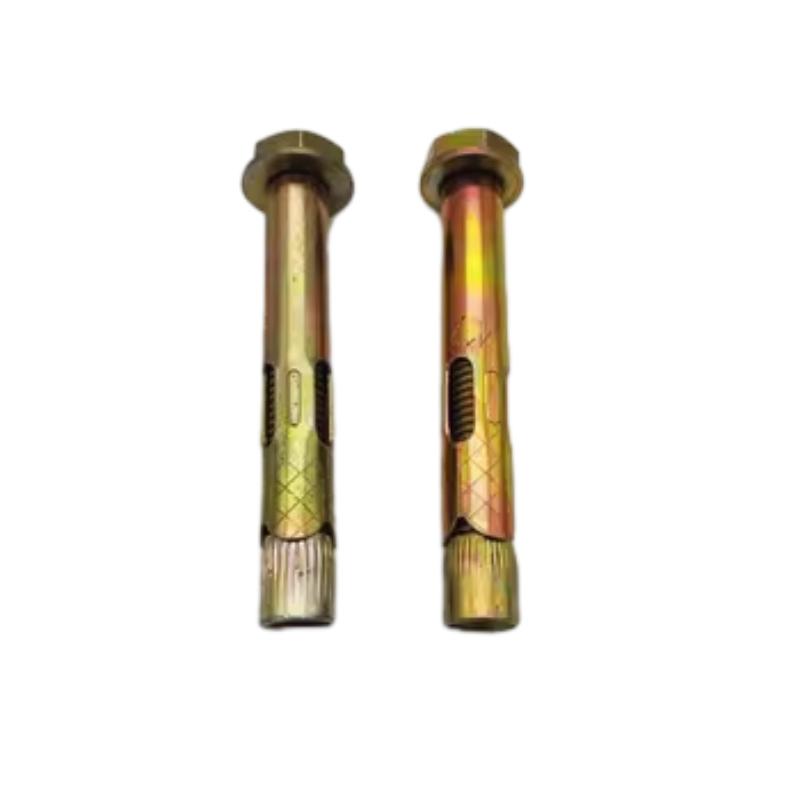
Options include M6–M16, lengths to ≈150 mm, white or yellow zinc, mechanical galvanizing, and branding on heads. For cracked concrete or edge distances under standard, consider alternative anchor types; otherwise the hex bolt sleeve anchor shines for speed: drill, clean, set, torque. Actually, a quick blow-out of the hole boosts consistency more than people think.
Case notes: a warehouse retrofit in Tianjin swapped chemical anchors for hex bolt sleeve anchor M10s, cutting install time by roughly 30%. Another mall project (Doha) used M8s for cable trays—zero call-backs reported at 12-month inspection, according to the GC.
Compliance, certifications, and notes
Typical documentation includes ISO 9001 factory certification, material certs (EN/ASTM), plating conformance (ASTM B633/ISO 4042), and test summaries per ASTM E488. For design to international codes, engineers usually reference ACI 318 (Chapter 17) or EN 1992-4. If you need ETA/ICC-ES reports, ask upfront—availability varies by series.
Manufactured in: No. 40, Zhuoju Road, Dongmingyang Industrial Park, Mingguan Town, Yongnian District, Handan City, Hebei Province, China.
Bottom line: for dry interior concrete, the hex bolt sleeve anchor remains a practical, budget-friendly choice—especially when speed, repeatability, and simple QA matter more than maximum capacity.
- ASTM E488/E488M: Standard Test Methods for Strength of Anchors in Concrete.
- ISO 898-1: Mechanical properties of fasteners made of carbon steel and alloy steel.
- ASTM B633 / ISO 4042: Electrodeposited coatings of zinc on iron and steel.
- ACI 318 (Chapter 17) and EN 1992-4: Design of anchorage to concrete.
-
Guide to Calculating the Best Expansion Anchor Bolt Length
NewsApr.16,2026
-
Guide to the Correct Drill Size for 3 8 Wedge Anchor Installation
NewsApr.09,2026
-
Comprehensive Guide to Dottie Wedge Anchor Selection and Installation
NewsApr.07,2026
-
Comprehensive Guide to Ceiling Wedge Anchors for Secure Installations
NewsApr.04,2026
-
Understanding the Versatility and Applications of Carbon Steel Wedges
NewsMar.31,2026
-
The Essential Guide to Bolt Wedges Strength and Application
NewsMar.28,2026
 English
  Bengali
  Bulgarian
  Catalan
  Czech
Czech  French
  German
  Hindi
Hindi  Hungarian
  Italian
  Kazakh
  Korean
  Portuguese
  Romanian
  Slovak
  Somali
  Spanish
  Turkish


