You know, I've been running around construction sites for over a decade now. Anchor bolts… they're a deceptively simple thing, aren’t they? But honestly, the amount of trouble they can cause if you get them wrong...it's not funny. We've seen it all - shear failures, corrosion issues, bolts that just…won't hold. The industry's really starting to lean into more prefabricated construction these days, and that puts even more pressure on getting the anchor bolt design right. Pre-fab means less room for error on-site, and a lot more reliance on the initial installation. It’s a shift, let me tell you.
A lot of folks think it’s just about picking the right diameter and length. Nope. It’s layers upon layers of considerations. And believe me, designers often fall into the trap of over-specifying. They'll pick the biggest, beefiest bolt they can find, thinking that automatically equals safety. But sometimes, that's the worst thing you can do. You introduce unnecessary stress, make installation harder, and frankly, waste money.
I saw a project last year, a big data center build…the spec called for these massive, high-strength bolts for everything. Turns out, the concrete mix they were using couldn’t actually handle that much stress concentration. We had to re-engineer almost the entire anchoring system. A mess. A real mess. Anyway, I think focusing on a holistic approach—considering the concrete quality, the load conditions, and even the environmental factors—is key.
Understanding Anchor Bolt CAD in Modern Construction
To be honest, a lot of guys on site don’t even think about the CAD part of it. They just see a bolt and a hole. But the CAD drawings – the detailed 3D models, the stress analyses, the shop drawings… that’s where the real magic (or potential disaster) happens. It's about making sure everything fits, that the loads are distributed correctly, and that the bolts won't fail prematurely. Especially with the rise of BIM (Building Information Modeling), anchor bolt CAD is becoming more integrated into the whole building lifecycle.
You used to just hand a drawing to the fabricator and hope for the best. Now, there’s more scrutiny, more checking, and more accountability. And that's a good thing, even if it adds a little extra paperwork. We’ve got to move away from that "figure it out on site" mentality, because that's where costs really blow out.
The Core Components of Anchor Bolt CAD Design
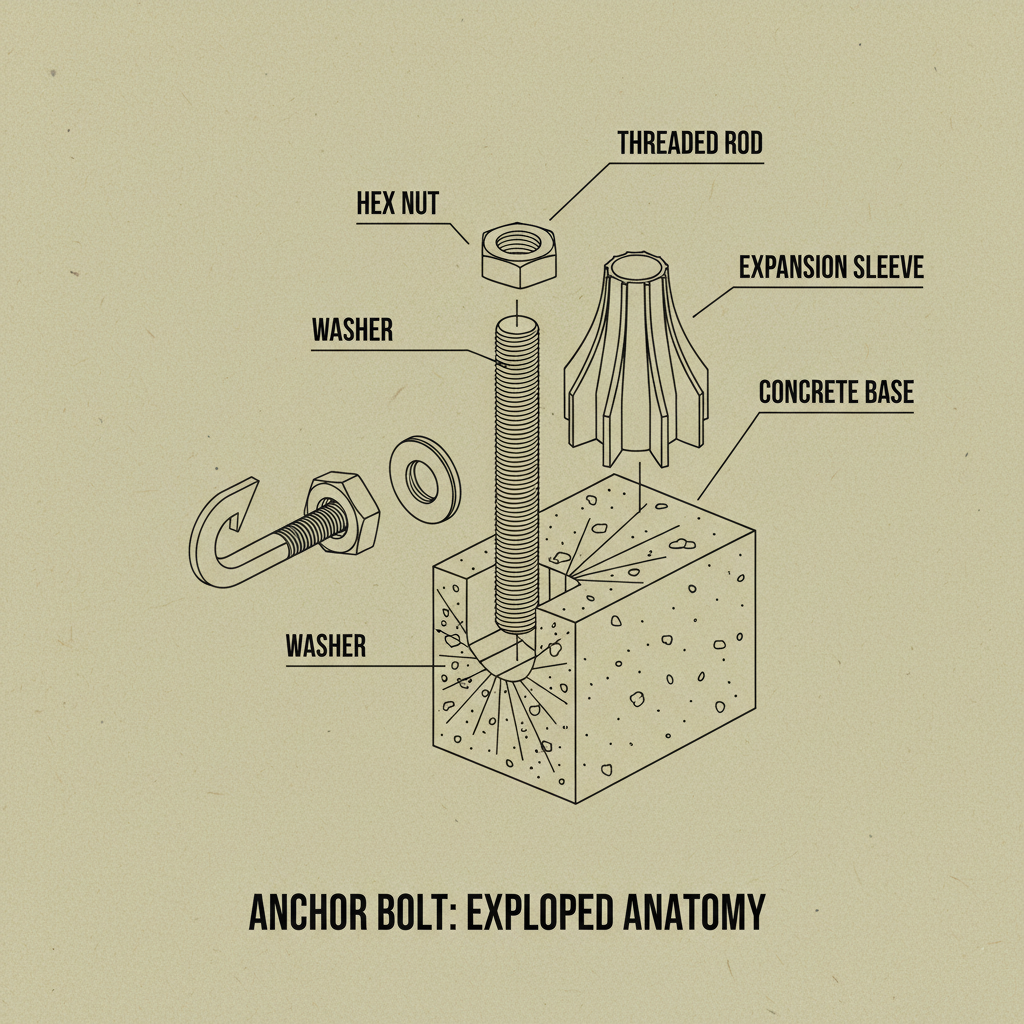
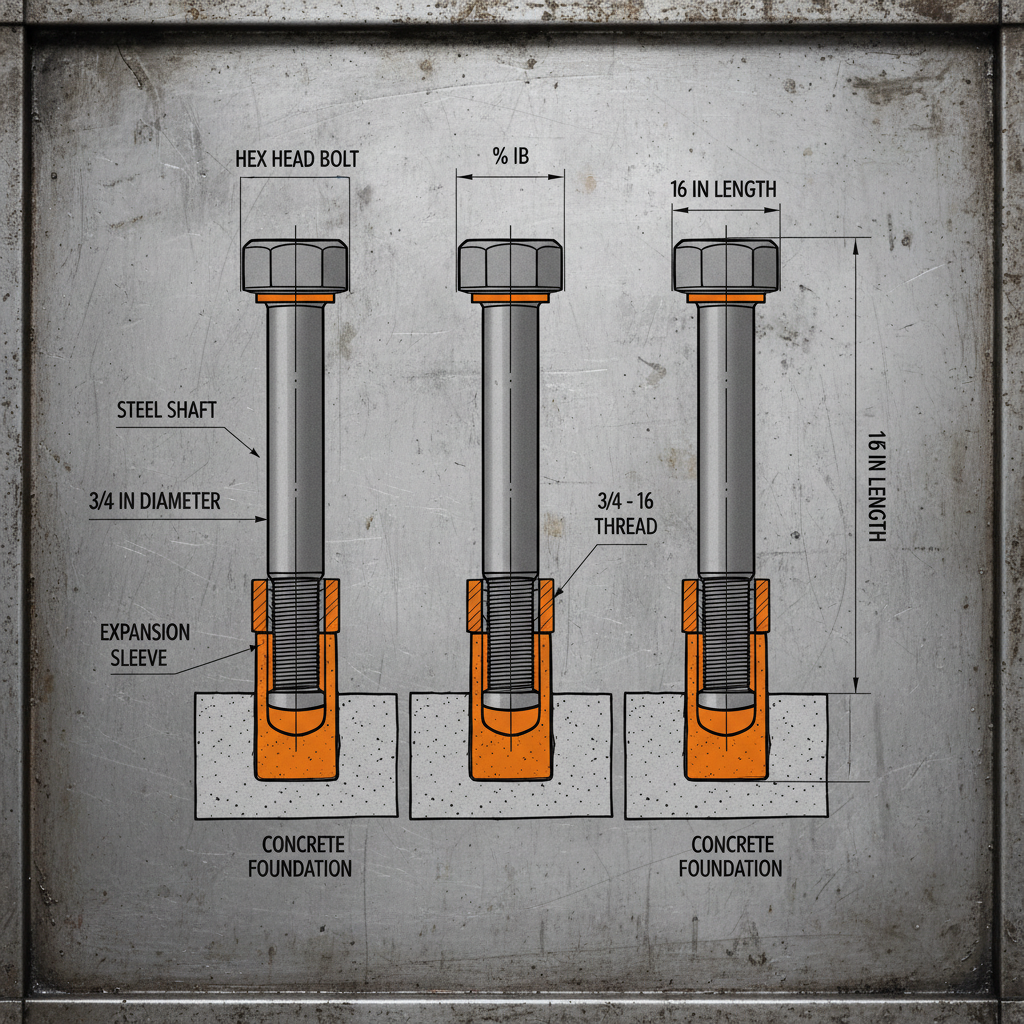
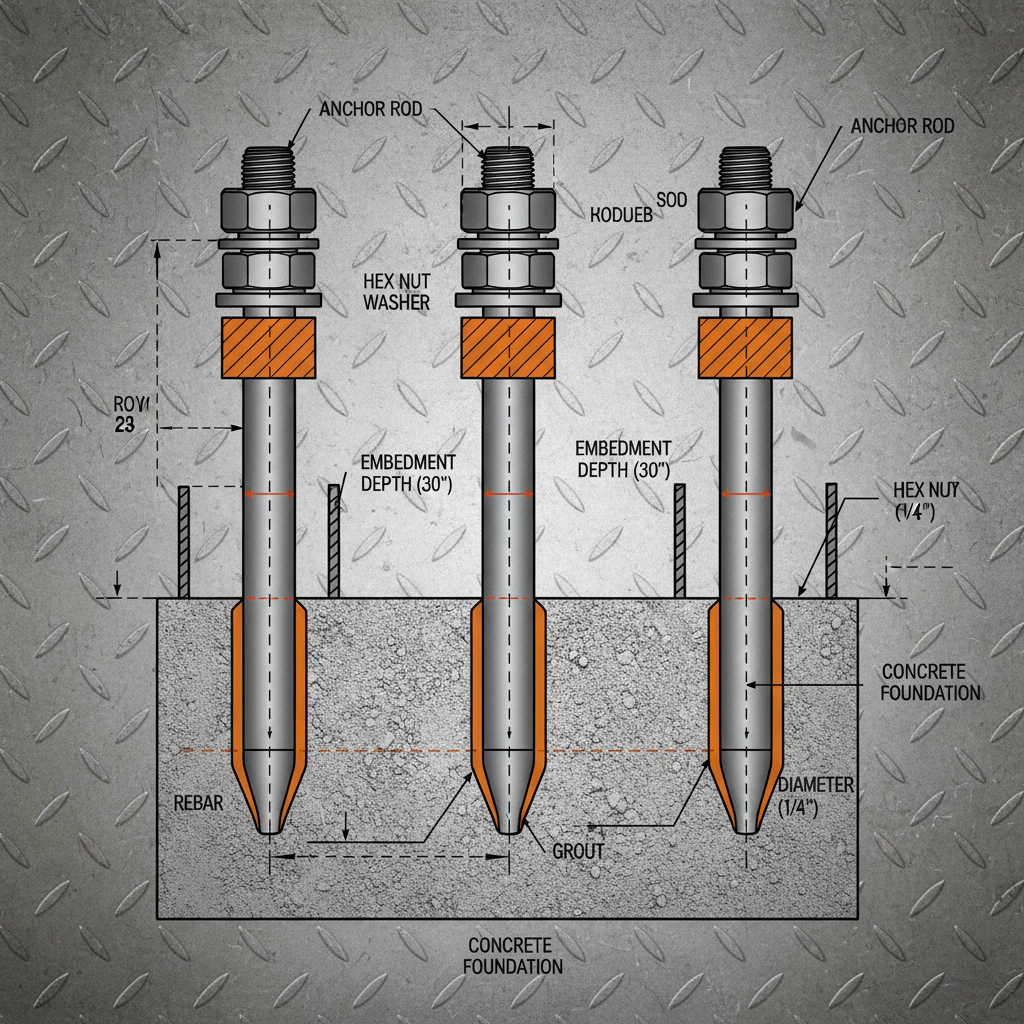
Okay, so what actually goes into a good anchor bolt CAD design? First, you’ve got the geometry, obviously. Bolt diameter, length, embedment depth, spacing...all the physical dimensions. But then you get into the material properties – yield strength, tensile strength, corrosion resistance. That's huge. We’ve seen failures because they skimped on the coating, and the bolts rusted solid. Then there’s the concrete breakout strength, which is a bit of a black art, honestly. It depends on the concrete mix, the age of the concrete, and even the moisture content.
And don’t forget the edge distance and spacing requirements. Too close to the edge, and the concrete will just spall. Too close together, and you weaken the concrete between the bolts. It's a delicate balance. And then, strangley enough, the type of loading matters a lot - static, dynamic, shear, tension...all require different calculations and different bolt configurations. It is really easy to overlook.
Finally, the connection details. How the bolt connects to the structural member – is it a direct connection, or is there a steel plate involved? The devil's in the details, as they say. The CAD model needs to show everything.
Materials and Their Practical Considerations
Have you noticed how many different types of anchor bolts there are these days? Galvanized steel is the standard, of course. It’s cheap and readily available. But it’s not ideal for harsh environments. You get salt spray, or chemical exposure, and that galvanization goes to pot pretty quickly. Stainless steel is better, but it's expensive. And the different grades of stainless… that's another whole can of worms. 304, 316, duplex stainless… each one has its pros and cons.
We're also seeing more and more use of fiber-reinforced polymer (FRP) anchors. They’re lightweight, corrosion-resistant, and surprisingly strong. But they're not cheap, and they don’t always play nice with existing construction methods. I encountered this at an offshore platform factory last time, the engineers insisted on FRP because of the seawater, but the welders were used to steel, and it took them ages to figure out how to work with it. It smelled kinda funny too, like burnt plastic.
And then there's the whole issue of coatings. Epoxy coatings, zinc-rich coatings, ceramic coatings... each one offers a different level of protection. It really comes down to the specific application and the expected service life. The thing is, you have to think about how these materials will be handled on site. If the workers are going to be banging them around, you need a coating that can withstand some abuse.
Real-World Testing and Performance Analysis
Forget the lab tests. They’re useful for getting a baseline, but they don’t tell you what’s going to happen in the real world. I always push for field testing, whenever possible. Pull-out tests, shear tests, corrosion tests… you name it. I remember one project where the engineer swore the new anchor bolt design was foolproof, based on the lab results. We did a pull-out test on site, and the bolt failed at half the predicted load. Turns out, the concrete was weaker than assumed.
We also do a lot of visual inspections. Look for cracks in the concrete, signs of corrosion, and any other indication of distress. And talk to the guys on site. They're the ones who are actually installing the bolts, and they'll often spot problems that the engineers miss. I think that’s a crucial point, really. Engineers are smart, but they're not always practical.
Anchor Bolt CAD Failure Rate by Factor
Application Scenarios and Industry Use Cases
You see anchor bolts everywhere, right? Bridges, buildings, power plants, offshore platforms…they’re essential for connecting things. But the specific application dictates the design. For example, a bridge anchor bolt is going to have very different requirements than a bolt used to secure a handrail. Wind loading, seismic activity, corrosion… all of these factors come into play.
The power generation industry is a big one for us. Those turbine towers? They’re held together with thousands of anchor bolts. And they have to withstand some serious stress. The aerospace industry too, of course. Anything that needs to be securely fastened to a concrete foundation is going to use anchor bolts. Honestly, if it doesn't move and is supposed to stay put, it's probably anchored.
Advantages, Disadvantages, and Long-Term Value
The biggest advantage of a well-designed anchor bolt system is reliability. If it’s done right, it’ll hold for decades, with minimal maintenance. And that saves money in the long run. But there are drawbacks. They can be expensive, especially if you’re using high-strength materials. And installation can be tricky, especially in tight spaces. Sometimes it's faster (and cheaper) to just weld something in place, but that creates other problems – stress concentrations, potential for fatigue failure…
The long-term value is really about peace of mind. Knowing that the structure is safe and secure. Knowing that you've done your due diligence and accounted for all the potential failure modes. That’s worth a lot, trust me. Especially when you’re dealing with something critical, like a bridge or a power plant.
Ultimately, it comes down to a cost-benefit analysis. You have to weigh the cost of the anchor bolts against the cost of a potential failure. And in most cases, it’s worth investing in a good quality system.
Customization and Future Trends in Anchor Bolt CAD
Most anchor bolt manufacturers will customize their products to meet your specific needs. Different lengths, diameters, materials, coatings… you name it. Last month, that small boss in Shenzhen who makes smart home devices insisted on changing the interface to for the bolts because "it's the future", and the result was we had to redesign half the securing system. He insisted. Anyway, it’s all about flexibility.
As for future trends, I think we’re going to see more use of 3D printing and generative design. Being able to create complex anchor bolt geometries optimized for specific load conditions… that's going to be a game-changer. And I think we’ll see more integration of sensors into anchor bolts, to monitor stress levels and detect potential failures. Smart bolts, basically.
We’re also looking at new materials – high-strength alloys, self-healing concrete… The goal is to create anchor bolt systems that are lighter, stronger, more durable, and more sustainable. And, frankly, less of a headache for the guys on site.
A Simple Overview of Common Anchor Bolt Issues
| Issue Type |
Likelihood (1-10) |
Severity (1-10) |
Mitigation Strategy |
| Concrete Spalling |
6 |
8 |
Increase embedment depth, use larger diameter bolts |
| Corrosion |
7 |
7 |
Use stainless steel, apply protective coatings |
| Installation Error |
5 |
9 |
Proper training, quality control inspections |
| Insufficient Strength |
4 |
10 |
Accurate load calculations, appropriate bolt selection |
| Shear Failure |
3 |
8 |
Use shear-resistant bolts, increase bolt spacing |
| Fatigue Cracking |
2 |
9 |
Design for dynamic loads, use fatigue-resistant materials |
FAQS
Honestly, it's rushing the process. People don’t read the specs, they skip steps, they use the wrong tools... it’s a recipe for disaster. Properly cleaning the hole, ensuring the correct embedment depth, and tightening the bolts to the specified torque are all critical. It takes time and attention to detail, but it’s worth it. Skipping a step to save five minutes can cost you thousands later. We’ve seen it happen too many times.
Hugely important. You can have the best anchor bolts in the world, but if the concrete is weak or cracked, they’re not going to hold. The compressive strength of the concrete, the aggregate type, and even the water-cement ratio all affect the anchor bolt’s breakout strength. It’s not something you can just ignore. We always recommend getting a concrete core sample and testing it before starting the installation.
Not necessarily. Epoxy anchors are great for certain applications, especially when you need to anchor into cracked concrete. But they can be sensitive to temperature and moisture. Mechanical anchors are more reliable in those conditions. It really depends on the specific application. There’s no one-size-fits-all answer. You need to consider the load conditions, the concrete properties, and the environmental factors.
That’s a tough one. Saltwater is brutal. You need to use corrosion-resistant materials, like stainless steel or hot-dip galvanized steel. And you need to apply a protective coating to the bolts and the surrounding concrete. Regularly inspecting the bolts for signs of corrosion is also crucial. It's a constant battle, honestly. Prevention is key.
Generally, no. Once an anchor bolt has been loaded, it’s considered damaged and should not be reused. The threads can be stripped, and the material can be weakened. It’s just not worth the risk. It’s cheaper to replace the bolt than to risk a failure. Although, in some very specific applications with light loads and careful inspection, it might be possible, but it's rarely recommended.
Think holistically. Don’t just focus on the bolt itself. Consider the concrete, the loads, the environment, and the installation process. And talk to the guys on site. They have a wealth of practical knowledge that you won’t find in a textbook. It’s a team effort, and you need to leverage everyone’s expertise.
Conclusion
So, there you have it. Anchor bolts. They might seem like a small detail, but they’re absolutely critical for the safety and durability of any structure. From material selection and CAD design to installation and long-term maintenance, it’s a complex process that requires careful attention to detail and a solid understanding of the underlying principles. Ignoring any of these aspects can lead to costly repairs, or even catastrophic failure.
Ultimately, whether this thing works or not, the worker will know the moment he tightens the screw. They'll feel the give, hear the creak, or maybe just have a gut feeling that something isn't right. That’s why it’s so important to listen to them, and to respect their experience. And don't forget to visit our website at www.ytbolt.com for all your anchor bolt needs.




 English
  Bengali
  Bulgarian
  Catalan
  Czech
Czech  French
  German
  Hindi
Hindi  Hungarian
  Italian
  Kazakh
  Korean
  Portuguese
  Romanian
  Slovak
  Somali
  Spanish
  Turkish