


Oct . 01, 2025 12:40 Back to list
Need a Chemical Anchor Bolt for Heavy-Duty Ceiling Fixes?
Chemical Anchor Bolt Yellow Zinc Plated Carbon Steel Ceiling Anchor
If you work with suspended ceilings or MEP supports, you’ve probably asked for a chemical anchor bolt and been handed this exact type of hammer-in ceiling anchor. To be honest, naming in the field is messy—this model is actually a hammer-set expansion anchor (through-bolt style) engineered for consistent performance in concrete, both cracked and non-cracked. Still, many customers just call it a chemical anchor bolt, and the name stuck.
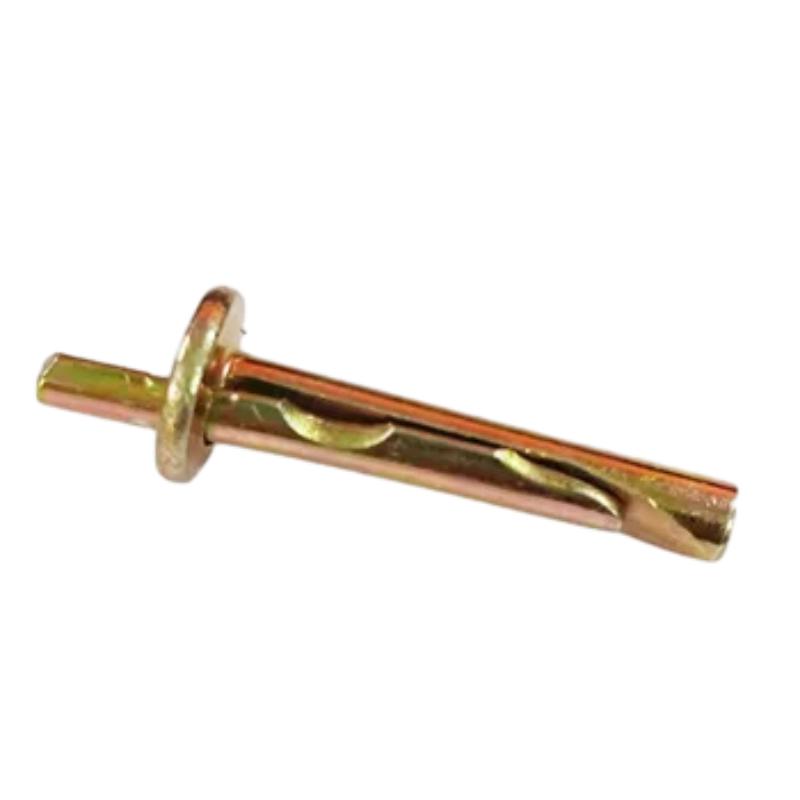
What’s trending in anchors right now
Short answer: reliability with fewer steps. Specifiers are pushing for anchors that don’t demand ultra-clean holes or torque-sensitive tools. This ceiling wire hanger fits that bill—impact expansion by hammer, no special setting tool. In renovation markets and tight ceiling voids, that’s gold. Also, seismic checks are moving from “optional” to “expected,” so designs tested for cracked concrete and cyclic loads are getting picked more often.
Product snapshot and typical specs
| Body material | Carbon steel (yellow zinc plated, ≈5–8 μm); optional stainless steel (A2/A4) |
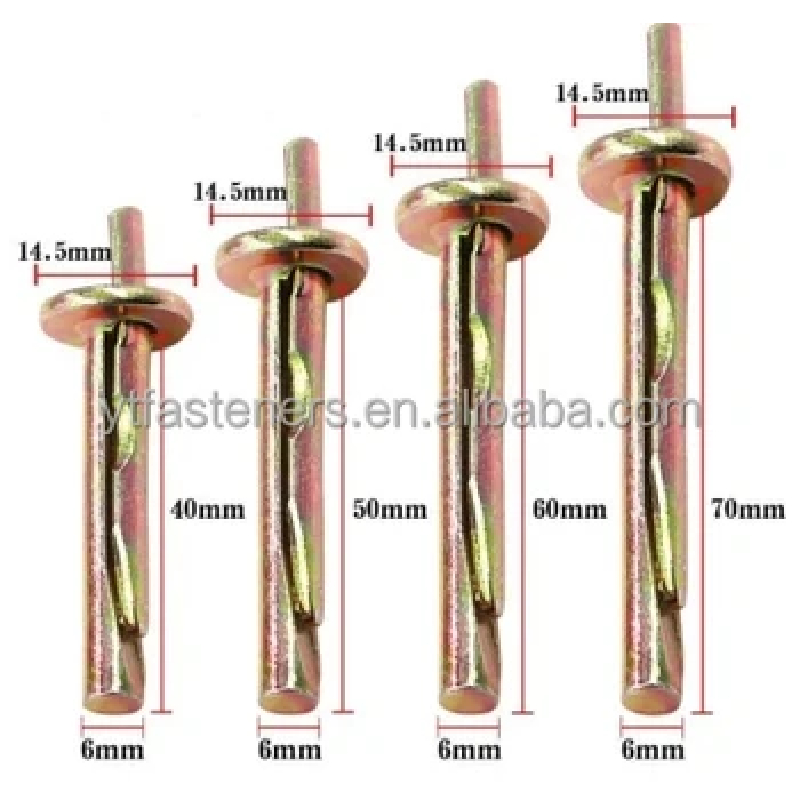
| Common sizes | M6, M8, M10 (others on request) |
| Typical embedment (hef) | ≈30–60 mm, selectable; deeper embedment → higher tension capacity |
| Base material | Cracked and non-cracked concrete, ≥C20/25 |
| Installation | Hammer-set expansion, no setting tool; low hole cleanliness requirement |
| Service life (indicative) | ≈25–50 years in dry internal conditions; real-world use may vary |
| Coating standards | ISO 4042 / ASTM B633; salt spray per ISO 9227 |
Internal lab data example (C30/37, M8, hef 50 mm): mean tension ≈7.8 kN; spacing/edge reduction applies. Always verify with project calculations. Many installers say the holding power is “surprisingly stout for how fast it sets.”
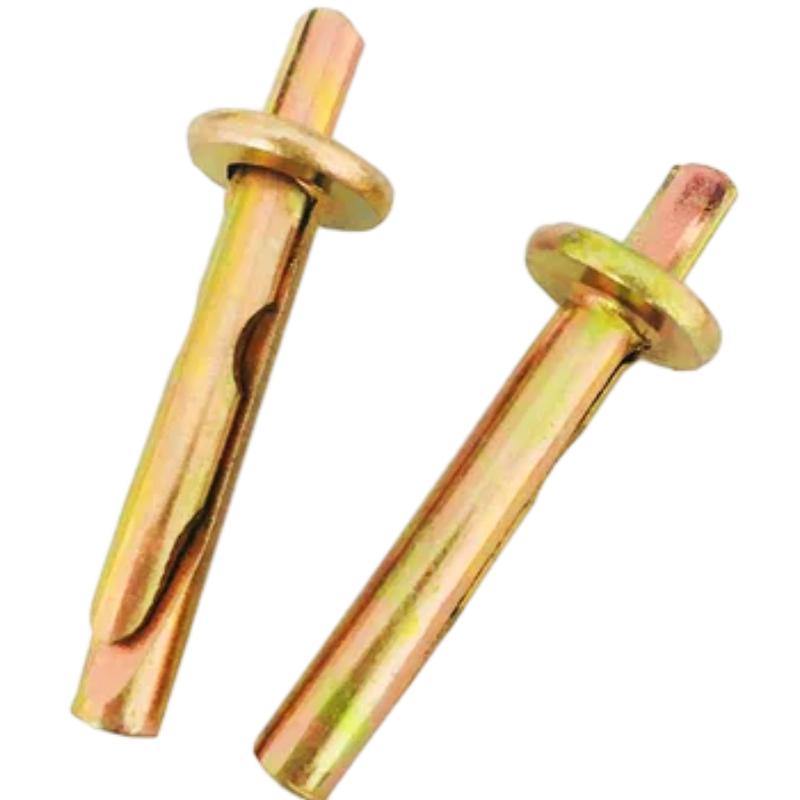
Where it’s used
- Lightweight ceilings and suspended ceiling grids
- HVAC hangers, cable trays, sprinkler lines (light to medium loads)
- Retail fit-outs, hotels, public corridors—tight overhead spaces
- Retrofits where hole cleanliness is hard to control
Manufacturing and QC flow (quick view)
Materials: low-carbon steel wire rod → cold heading of bolt and cone → sleeve forming → threading → deburring → yellow zinc plating (trivalent) → 100% visual → sample dimensional checks → pull-out tests in concrete blocks → corrosion tests (ISO 9227). Mechanical properties checked to ISO 898-1; coating thickness to ISO 4042. Conformance options include ETA per EAD 330232 or ACI 355.2 test protocols, depending on target market.
Advantages we keep hearing about
No torque wrench hassle, quick hammer-set, low hole cleanliness sensitivity, and cost-effective hardware. The chemical anchor bolt here behaves predictably with adjustable embedment—go deeper for higher tension (respecting edge distances, of course).
Vendor comparison (illustrative)
| Vendor | Core strength | Certs | Lead time | Price |
|---|---|---|---|---|
| YTBolt (Hebei, China) | Cost-performance, custom sizes | ISO/CE options; lab test reports | Around 2–4 weeks | $ |
| Hilti/Fischer | Broad ETA/ICC-ES portfolio | ETA/ICC-ES | Stock/short | $$$ |
| Local distributors | Immediate availability | Varies | Same day | $$ |
Customization and support
Head types, sleeve lengths, plating thickness, and stainless grades can be tailored. Bulk packaging for ceiling installers is common. Factory origin: No. 40, Zhuoju Road, Dongmingyang Industrial Park, Mingguan Town, Yongnian District, Handan City, Hebei Province, China.
A quick field story
In a North China mall retrofit, crews swapped adhesive anchors for these hammer-set units to speed night shifts. With M8 at 50 mm embedment, pulls averaged ≈7–8 kN in test blocks, which matched design needs for ceiling grids and light ducts. The superintendent said installation time dropped “by about a third.” That tracks with what we’ve seen elsewhere.
Bottom line: for fast, repeatable ceiling work, this chemical anchor bolt style remains a pragmatic choice—just run the calcs, mind spacing/edges, and keep an eye on corrosion class versus environment.
Authoritative references
- ACI 318-19, Chapter 17: Anchoring to Concrete.
- ACI 355.2-19: Qualification of Post-Installed Mechanical Anchors in Concrete.
- EAD 330232-00-0601: Mechanical fasteners for use in concrete (replacing ETAG 001 Annex C).
- ISO 898-1:2013, Mechanical properties of fasteners.
- ISO 4042:2023, Electroplated coatings on threaded fasteners.
- ISO 9227:2017, Corrosion tests in artificial atmospheres—Salt spray tests.
- ASTM B633-19, Electrodeposited Coatings of Zinc on Iron and Steel.
-
Guide to Calculating the Best Expansion Anchor Bolt Length
NewsApr.16,2026
-
Guide to the Correct Drill Size for 3 8 Wedge Anchor Installation
NewsApr.09,2026
-
Comprehensive Guide to Dottie Wedge Anchor Selection and Installation
NewsApr.07,2026
-
Comprehensive Guide to Ceiling Wedge Anchors for Secure Installations
NewsApr.04,2026
-
Understanding the Versatility and Applications of Carbon Steel Wedges
NewsMar.31,2026
-
The Essential Guide to Bolt Wedges Strength and Application
NewsMar.28,2026
 English
  Bengali
  Bulgarian
  Catalan
  Czech
Czech  French
  German
  Hindi
Hindi  Hungarian
  Italian
  Kazakh
  Korean
  Portuguese
  Romanian
  Slovak
  Somali
  Spanish
  Turkish


