


Aug . 27, 2025 03:20 Back to list
Hex Head Sleeve Anchors: Strong & Reliable Concrete Fastening
Understanding the hex head sleeve anchor: An Essential Fastener for Robust Applications
In the demanding world of B2B industrial applications, the choice of fastening solutions is paramount to structural integrity and operational safety. Among the myriad of anchoring devices, the hex head sleeve anchor stands out as a versatile and reliable option, engineered for high-performance installations in concrete, block, and brick. Its design, featuring a central hex bolt and an expandable sleeve, allows for robust anchoring suitable for a wide range of loads and environmental conditions. This comprehensive guide delves into the technical intricacies, application advantages, and industry relevance of these critical components.
From securing heavy machinery bases to installing structural supports in commercial buildings, understanding the capabilities of these anchors is crucial for engineers, project managers, and procurement specialists. The market for industrial fasteners continues to evolve, driven by advancements in material science, manufacturing processes, and increasing demands for enhanced durability and ease of installation. Our focus here is to provide a deep dive into what makes the hex head sleeve anchor a preferred choice in demanding environments, particularly those crafted from carbon steel with a yellow zinc finish.
Industry Trends and Market Dynamics for Sleeve Anchors
The global fasteners market is experiencing steady growth, propelled by robust expansion in construction, automotive, and general manufacturing sectors. Within this landscape, the demand for specialized anchors like the hex head sleeve anchor is witnessing a particular surge. Key trends include an increasing emphasis on high-strength, corrosion-resistant materials, driven by projects in harsh environments such as coastal construction and chemical processing plants. There's also a growing preference for fasteners that offer simplified installation and reduced labor costs, which sleeve anchors inherently provide due to their straightforward setup.
Sustainability is another emerging trend, with manufacturers exploring more eco-friendly production methods and coatings. The rise of modular construction and pre-fabricated building components also necessitates reliable and rapidly deployable anchoring solutions, further bolstering the relevance of products like the hex head sleeve anchor. Furthermore, smart infrastructure development, integrating IoT sensors and monitoring systems into structural elements, demands anchors capable of long-term, stable performance under dynamic conditions. The versatility to serve diverse dimensions such as 1/2 sleeve anchors, 3/4 sleeve anchor, and 5/8 sleeve anchor, makes them indispensable across various project scales.
Detailed Manufacturing Process of Hex Head Sleeve Anchors
The production of a high-quality hex head sleeve anchor involves a meticulous multi-stage manufacturing process, ensuring structural integrity and consistent performance. Our products, made from high-grade carbon steel with a yellow zinc plating, exemplify precision engineering. Here’s a typical process flow:
- Material Selection: High-quality carbon steel wire rod, typically SAE 1018 to 1022, is chosen for its excellent strength-to-weight ratio and formability. This ensures the core mechanical properties required for demanding applications.
- Cold Forging/Forming: The steel wire is fed into multi-station cold heading machines. These machines progressively form the intricate shapes of the hex bolt and the sleeve segments without heating the material above recrystallization temperature. This process enhances the material's grain structure and improves its mechanical strength.
- Thread Rolling: The threaded section of the hex bolt is formed using thread rolling dies. This method is superior to cutting threads as it compresses the material, increasing fatigue resistance and overall strength by preserving the steel's continuous grain flow.
- Sleeve Fabrication: The metal sleeve, often made from a thinner gauge carbon steel, is precision-cut and formed. The critical expansion slits are accurately punched or cut to ensure reliable expansion upon installation.
- Assembly: The hex sleeve, washer, and hex sleeve nut are assembled onto the hex bolt, creating the complete sleeve anchor hex bolt unit. This assembly ensures all components fit together perfectly for optimal performance.
- Heat Treatment (Optional but Recommended): For specific applications requiring enhanced hardness and tensile strength, components may undergo heat treatment processes such as quenching and tempering. This refines the microstructure, significantly increasing the anchor's load-bearing capacity.
- Surface Treatment (Yellow Zinc Plating): The assembled anchors are thoroughly cleaned and then undergo electroplating with yellow zinc. This process applies a thin, protective layer of zinc, followed by a chromate conversion coating, which imparts the distinctive yellow hue and provides superior corrosion resistance compared to plain zinc or untreated steel. This also prevents galvanic corrosion in certain environments.
- Quality Control & Testing: Throughout the entire process, stringent quality checks are performed. This includes dimensional verification, material composition analysis, tensile strength tests, shear strength tests, and salt spray corrosion resistance tests, adhering to international standards such as ISO 9001, ANSI, and ASTM E488. Service life is extended through these meticulous processes and material selections, often exceeding typical expectations in target industries like petrochemical, metallurgy, and water supply & drainage, where corrosion resistance and long-term stability are crucial.
The advantages in typical application scenarios are clear: energy saving during installation due to ease of use, and significant corrosion resistance from the yellow zinc plating, reducing maintenance costs over the product's lifespan.
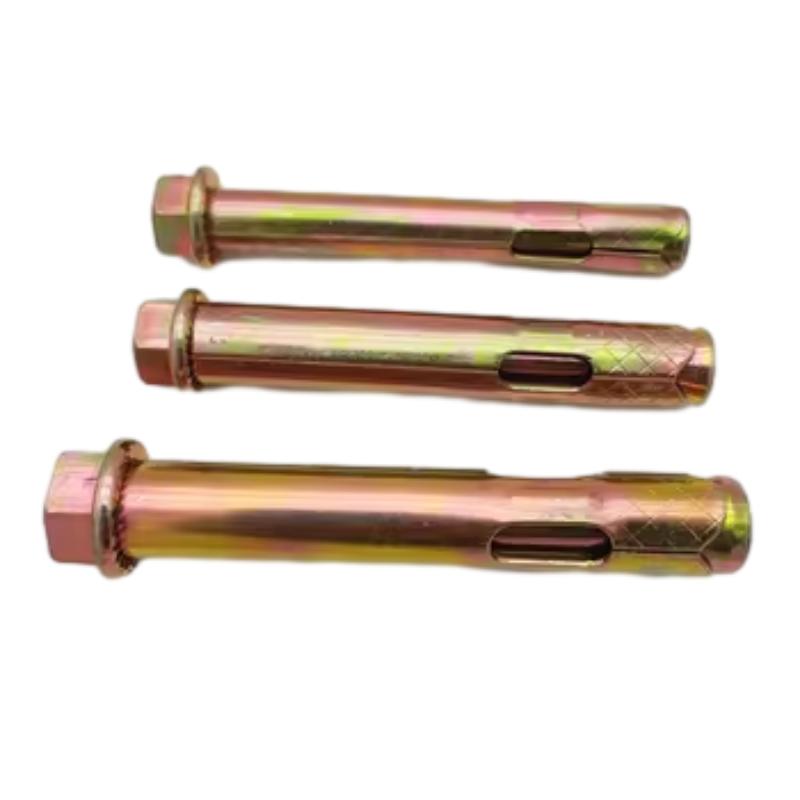
Technical Specifications and Performance Parameters
The performance of any fastener is quantified by its technical specifications. For hex head sleeve anchors, critical parameters include tensile strength, shear strength, embedment depth, and required torque. These specifications directly impact the safety and longevity of an installation.
Typical Hex Head Sleeve Anchor Specifications (Carbon Steel, Yellow Zinc)
| Parameter | Description | Typical Value / Range |
|---|---|---|
| Material | Hex bolt and sleeve material | Carbon Steel (e.g., SAE 1018-1022) |
| Finish | Corrosion protection coating | Yellow Zinc Plated |
| Diameter Range | Available anchor diameters | 1/4" to 3/4" (6mm to 19mm) |
| Length Range | Overall anchor length | 1-1/4" to 6" (30mm to 150mm) |
| Ultimate Tensile Strength (Concrete) | Maximum pull-out resistance (e.g., for a 1/2" anchor) | ~4,000 - 8,000 lbs (depending on concrete strength) |
| Ultimate Shear Strength (Concrete) | Maximum lateral load resistance (e.g., for a 1/2" anchor) | ~5,000 - 9,000 lbs (depending on concrete strength) |
| Minimum Embedment Depth | Minimum depth required for full performance | Varies by diameter, typically 1" to 2.5" |
| Drill Bit Size | Diameter of the hole to be drilled | Same as anchor diameter (e.g., 1/2" drill bit for 1/2" anchor) |
These values are based on laboratory tests in uncracked concrete with a minimum compressive strength of 2000 psi (13.8 MPa). Actual job site conditions, including concrete strength, aggregate type, and proximity to edges or other anchors, will influence the allowable working loads. Engineers must consult relevant building codes and safety factors, typically applying a safety factor of 4:1 for static loads.
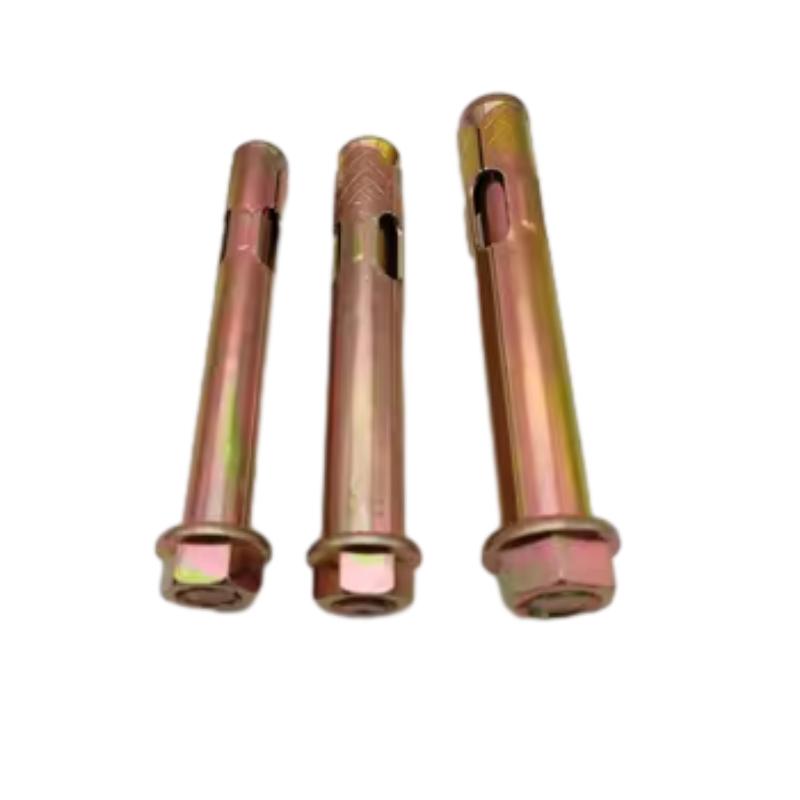
Diverse Application Scenarios
The versatility of the hex head sleeve anchor makes it indispensable across numerous industries and applications. Its ability to provide secure fastening in a variety of masonry materials makes it a preferred choice for:
- Construction & Infrastructure: Securing handrails, partition walls, façade elements, window and door frames, electrical conduit, and pipe supports in commercial, industrial, and residential buildings. They are critical for mounting elements to concrete slabs, walls, and foundations.
- HVAC Systems: Anchoring ductwork, ventilation systems, and large air conditioning units to structural elements, ensuring stability and vibration reduction.
- Mechanical & Electrical Installations: Fastening heavy machinery, control panels, cable trays, and lighting fixtures, where reliable overhead and wall mounting is essential.
- Petrochemical & Industrial Facilities: Due to their robustness and available corrosion resistance, they are used to secure conduits, piping, and light-to-medium load equipment in non-highly corrosive zones, often supported by additional protective measures.
- Water Supply & Drainage Systems: Mounting brackets, supports for large diameter pipes, and pump stations within water treatment plants and distribution networks.
- Metallurgy & Mining: Anchoring structural elements, safety barriers, and non-critical machinery in support facilities where concrete structures are prevalent.
The availability of sizes like the 1/2 sleeve anchors, 3/4 sleeve anchor, and 5/8 sleeve anchor further expands their applicability across various load requirements and substrate thicknesses.
Technical Advantages and Performance Edge
The Fasteners Factory Price Carbon Steel Yellow Zinc Sleeve Anchor Hex Flange Nut offers a compelling array of technical advantages that make it a superior choice for many industrial applications:
- Robust Expansion Mechanism: The unique design allows the sleeve to expand uniformly within the drilled hole as the hex bolt is tightened, creating a positive mechanical interlock. This ensures high pull-out and shear values, even in challenging base materials.
- Material Versatility: Effective in solid concrete, block (CMU), and brick, offering flexibility for varied construction projects without requiring different anchoring systems.
- Corrosion Resistance: The yellow zinc plating provides excellent protection against rust and oxidation in moderately corrosive environments. This significantly extends the service life of the fastener, reducing the need for premature replacement and associated maintenance costs.
- Ease of Installation: Installation is straightforward, requiring only a pre-drilled hole of the same diameter as the anchor. This simplicity translates to faster project completion and reduced labor expenses, embodying a true energy saving advantage.
- High Load-Bearing Capacity: Engineered to withstand substantial tensile and shear forces, making them suitable for securing heavy fixtures and structural elements.
- Removability (Non-Permanent): Unlike epoxy or some chemical anchors, sleeve anchors can typically be removed if future modifications or demolition are required, offering greater flexibility.
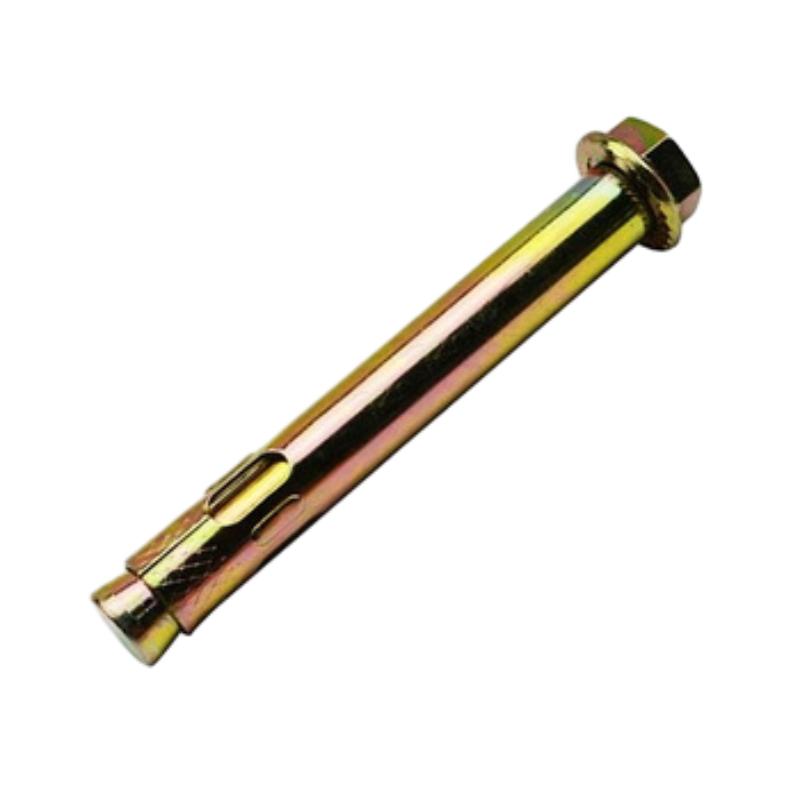
Product Comparison: Hex Head Sleeve Anchor vs. Other Anchoring Systems
While the hex head sleeve anchor offers significant benefits, understanding its position relative to other common anchoring systems is crucial for optimal selection. Here's a comparative overview:
Anchoring System Comparison
| Feature | Hex Head Sleeve Anchor (Carbon Steel, Yellow Zinc) | Wedge Anchor (Carbon Steel, Zinc Plated) | Drop-in Anchor | Chemical/Adhesive Anchor |
|---|---|---|---|---|
| Base Materials | Concrete, Block, Brick | Solid Concrete Only | Solid Concrete, Stone | Concrete, Block, Brick, Stone |
| Installation Method | Pre-drill, insert, tighten nut. Easy. | Pre-drill, insert, hammer down, tighten nut. Easy. | Pre-drill, insert, set with setting tool. | Pre-drill, clean, inject resin, insert rod, cure time. Complex. |
| Load Capacity | Medium to Heavy (Good shear & tensile) | Heavy (Excellent tensile, good shear) | Light to Medium (Primarily overhead applications) | Very Heavy (Superior tensile & shear) |
| Corrosion Resistance | Good (Yellow Zinc Plating) | Fair (Standard Zinc Plating) | Fair (Standard Zinc Plating) | Excellent (Dependent on rod material) |
| Removability | Yes, can be removed | Yes, but often damages hole | No, flush mount. | No, permanent bond. |
This comparison highlights the hex head sleeve anchor's balanced attributes: ease of use, strong performance in various base materials, and good corrosion resistance, making it an excellent all-rounder for many projects where a balance of strength, versatility, and cost-effectiveness is desired. For extremely critical, high-load applications in solid concrete, wedge anchors might offer marginally higher tensile values, while chemical anchors provide the ultimate strength and weather resistance but with higher complexity and cost.
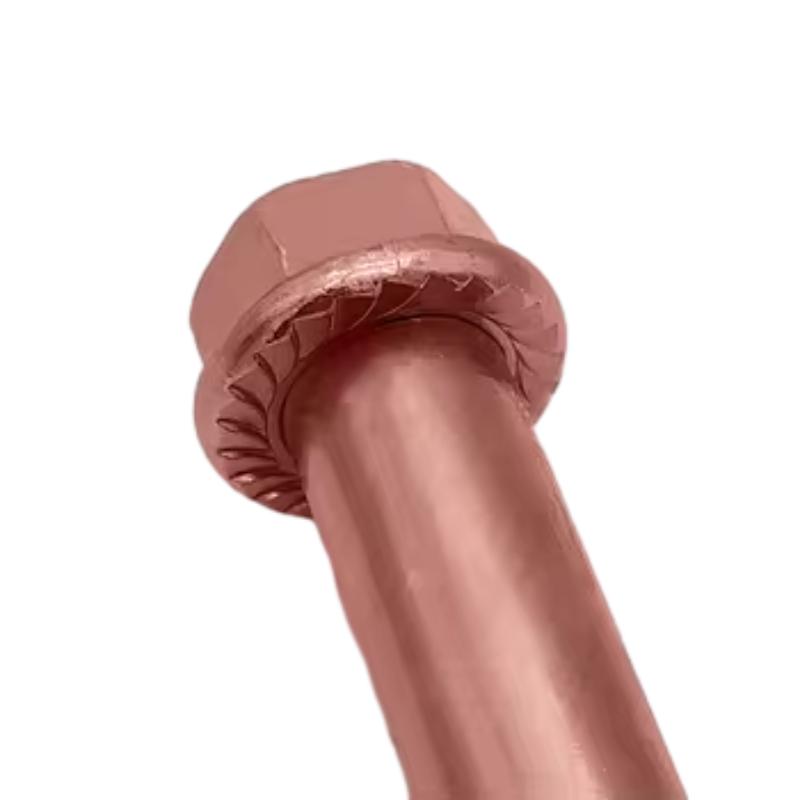
Customized Solutions and Bespoke Fasteners
While standard hex head sleeve anchors cater to a broad spectrum of needs, specialized projects often require bespoke solutions. As a professional manufacturer, we offer extensive customization capabilities to meet unique project specifications. This includes:
- Material Variations: Beyond carbon steel, options include stainless steel (304, 316 for extreme corrosion resistance), or specialized alloys for specific temperature or chemical exposure.
- Custom Lengths and Diameters: Fabrication of hex sleeve anchors in non-standard lengths or diameters (e.g., larger 5/8 sleeve anchor or smaller specific needs) to accommodate unusual embedment depths or base material thicknesses.
- Alternative Coatings: Options such as hot-dip galvanization for superior outdoor corrosion resistance, proprietary polymer coatings for enhanced chemical resistance, or aesthetic finishes.
- Special Head Types: While hex head is standard, other drive types or integrated washers can be engineered for specific installation tools or load distribution requirements.
- Engineered Performance: Working with client engineers to develop anchors optimized for specific pull-out or shear loads, potentially involving design modifications to the sleeve or thread geometry.
Our engineering team collaborates closely with clients from conceptual design through prototyping and final production, ensuring that customized fasteners meet the highest standards of quality and performance, conforming to relevant industry certifications like ISO and ASTM.
Application Case Studies: Hex Head Sleeve Anchors in Action
Real-world applications demonstrate the practical advantages of these anchors:
- Case Study 1: Commercial HVAC Unit Installation
A major commercial office complex required the secure overhead mounting of several large HVAC units to concrete ceilings. Traditional wedge anchors proved challenging in areas with variable concrete quality. By specifying 3/4 sleeve anchors, the installation team achieved consistent, high-strength anchorage. The easy installation process significantly reduced labor time, and the yellow zinc plating provided the necessary corrosion resistance for the conditioned indoor environment. Feedback indicated a 20% reduction in installation time compared to previous projects using alternative anchors.
- Case Study 2: Petrochemical Facility Pipe Rack Support
In a new petrochemical plant, a network of support structures for small-to-medium diameter pipelines needed to be anchored to existing concrete pads. Given the moderately corrosive industrial atmosphere, carbon steel yellow zinc sleeve anchors were selected. The project utilized a mix of 1/2 sleeve anchors and 5/8 sleeve anchor sizes based on load calculations. The ease with which the hex head sleeve anchor could be installed allowed for rapid deployment across hundreds of anchor points, contributing to the project's adherence to a tight schedule while ensuring long-term structural integrity and corrosion protection for decades of service.
- Case Study 3: Water Treatment Plant Equipment Anchoring
A municipal water treatment facility needed to anchor various pump bases and control cabinets to concrete foundations. The environment presented constant humidity and potential exposure to treated water. While stainless steel was considered for critical areas, the cost-effectiveness and proven corrosion resistance of yellow zinc plated hex head sleeve anchor units provided a viable solution for many general anchoring tasks. The facility managers reported excellent long-term performance, with no signs of anchor fatigue or significant corrosion after five years of operation.
Frequently Asked Questions (FAQ)
- Q: What are sleeve anchors used for?
- A: Sleeve anchors are highly versatile mechanical anchors used for fastening items to solid concrete, brick, and block. Common applications include securing handrails, machinery, electrical fixtures, pipe supports, and various structural elements in construction and industrial settings.
- Q: What is the benefit of yellow zinc plating on a hex head sleeve anchor?
- A: Yellow zinc plating provides enhanced corrosion resistance compared to standard zinc plating. The chromate conversion layer offers superior protection against oxidation and mild chemical exposure, extending the fastener's lifespan in moderately harsh environments.
- Q: Can I use a sleeve anchor in cracked concrete?
- A: Standard sleeve anchors are generally designed for use in uncracked concrete. For applications in cracked concrete, specialized anchors with ICC-ES approval for cracked concrete should be considered to ensure proper performance and safety. Always consult product specifications and local building codes.
- Q: What drill bit size should I use for a 1/2 sleeve anchor?
- A: For sleeve anchors, the drill bit size should match the anchor's diameter. So, for a 1/2 sleeve anchor, you should use a 1/2-inch carbide-tipped masonry drill bit.
- Q: Are your products certified to industry standards?
- A: Yes, our manufacturing processes and products adhere to stringent international quality standards, including ISO 9001. Our fasteners are tested in accordance with ASTM and ANSI specifications to ensure reliability and performance. Specific product certifications are available upon request.
Lead Times, Warranty, and Customer Support
We understand that reliable logistics and unwavering support are as crucial as product quality in B2B transactions. Our commitment to client satisfaction is reflected in our operational transparency:
- Lead Time & Fulfillment: Standard stock items, including popular sizes of hex head sleeve anchors like 1/2 sleeve anchors, 3/4 sleeve anchor, and 5/8 sleeve anchor, typically have a lead time of 3-7 business days for order processing and shipment. For large-volume custom orders, lead times will be provided with the quotation, generally ranging from 2-4 weeks depending on complexity and material availability. We leverage efficient global logistics networks to ensure timely delivery.
- Warranty Commitment: All our fasteners are backed by a comprehensive warranty, guaranteeing them against defects in material and workmanship under normal use and service for a period of one year from the date of purchase. This commitment underscores our confidence in the quality and durability of our products. Detailed warranty terms are available upon request.
- After-Sales Support: Our dedicated customer support team is available to assist with technical queries, installation guidance, order tracking, and any post-purchase concerns. We provide expert advice to ensure optimal product selection and performance in your specific applications. Contact us via phone, email, or our online portal for prompt and professional assistance.
Conclusion
The Fasteners Factory Price Carbon Steel Yellow Zinc Sleeve Anchor Hex Flange Nut represents a cornerstone solution for reliable and versatile fastening in the B2B industrial landscape. From its meticulously engineered manufacturing process, ensuring material integrity and optimal performance, to its proven advantages in diverse application scenarios, this type of hex head sleeve anchor stands as a testament to precision and durability. By adhering to rigorous quality standards and offering comprehensive support, we empower our clients to achieve secure, efficient, and long-lasting installations across their critical projects. Choosing the right anchoring solution is an investment in safety and operational continuity, and the sleeve anchor consistently delivers on that promise.
References
- ASTM International. "ASTM E488/E488M-19, Standard Test Methods for Strength of Anchors in Concrete Elements." www.astm.org
- ISO (International Organization for Standardization). "ISO 9001:2015 Quality management systems – Requirements." www.iso.org
- American Concrete Institute (ACI). "ACI 318-19: Building Code Requirements for Structural Concrete." www.concrete.org
- Corrosionpedia. "Yellow Zinc Plating." www.corrosionpedia.com
- Fastener Technology International. "Cold Forming Technologies." www.fastenertech.com
-
Guide to Calculating the Best Expansion Anchor Bolt Length
NewsApr.16,2026
-
Guide to the Correct Drill Size for 3 8 Wedge Anchor Installation
NewsApr.09,2026
-
Comprehensive Guide to Dottie Wedge Anchor Selection and Installation
NewsApr.07,2026
-
Comprehensive Guide to Ceiling Wedge Anchors for Secure Installations
NewsApr.04,2026
-
Understanding the Versatility and Applications of Carbon Steel Wedges
NewsMar.31,2026
-
The Essential Guide to Bolt Wedges Strength and Application
NewsMar.28,2026
 English
  Bengali
  Bulgarian
  Catalan
  Czech
Czech  French
  German
  Hindi
Hindi  Hungarian
  Italian
  Kazakh
  Korean
  Portuguese
  Romanian
  Slovak
  Somali
  Spanish
  Turkish


