


Oct . 21, 2025 12:25 Back to list
Expansion Bolt Solutions: High-Strength, Corrosion-Resistant
Expansion Bolt reality check: wedge anchors that actually hold
If you’ve ever hung a heavy racking bay or fixed a baseplate where failure simply isn’t an option, you already know the quiet hero of the job is the humble Expansion Bolt—in this case, a carbon steel wedge anchor with a silvery zinc finish. To be honest, I’ve seen every flavor of anchor on sites from Tianjin to Texas, and wedge anchors still dominate when you’re in solid concrete and need predictable behavior without messy curing times.
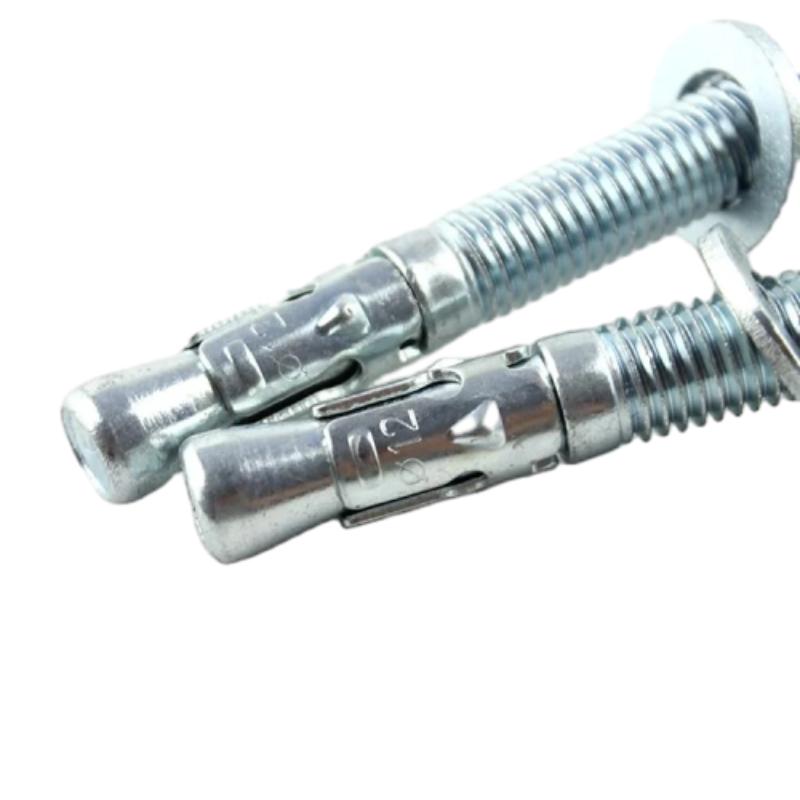
What’s on the table (and why it matters)
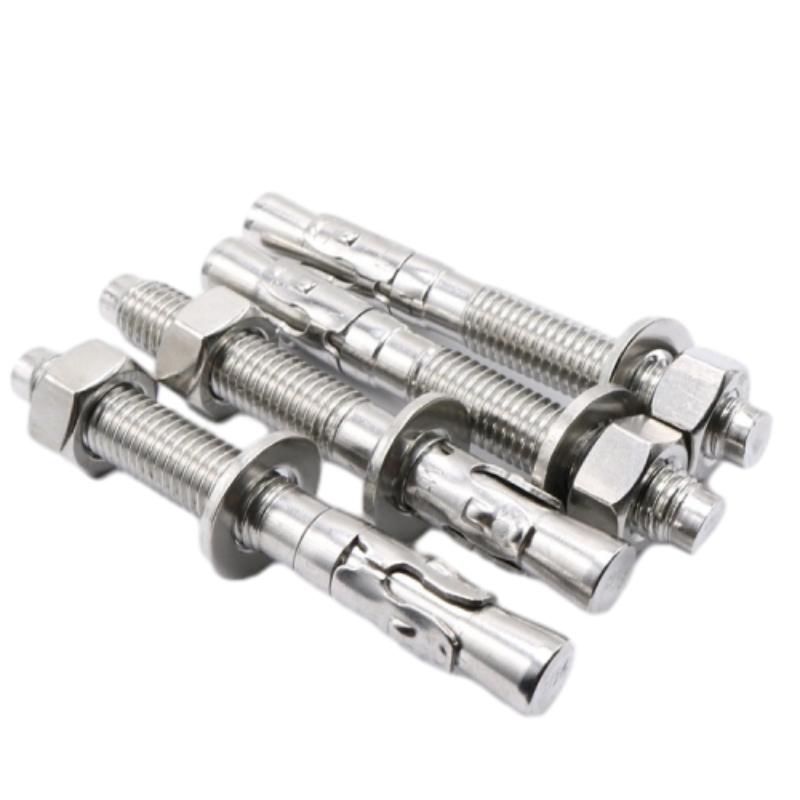
Model shown: Different Models of Carbon Steel Wedge Anchor with Silvery Zinc Plated, made in Yongnian District, Handan, Hebei (No. 40, Zhuoju Road, Dongmingyang Industrial Park). Diameters M6–M24 and lengths ≈60–200 mm cover most MEP, steelwork, and light machinery fixings. Many customers say install speed and “set-and-forget” reliability are the big wins. I’d agree.
| Parameter | Spec (≈ real‑world use may vary) |
| Material | Carbon steel, cold‑headed; thread rolled |
| Finish | Silvery zinc plated; optional hot‑dip galvanizing |
| Sizes | M6–M24; length 60–200 mm |
| Typical embedment | ≈4.5–7.5 × diameter in cracked/uncracked concrete |
| Zinc thickness | ≈5–12 μm (electro‑plated); HDG ≈45–80 μm |
| Service life | Inland C1–C2: 10–20 yrs zinc; coastal/industrial: choose HDG |
| Testing | Proof per ASTM E488/E488M; anchor qual. per ACI 355.2 (on request) |
Process flow, quality, and the not‑so‑glam details
Manufacturing usually goes: wire drawing → cold heading → turning/chamfer → thread rolling → heat treatment → plating → 100% visual + sample mechanical tests. Pull‑out and shear tests follow ASTM E488/E488M, while steel properties trace back to ISO 898‑1. Salt spray per ISO 9227 is common (I’ve seen 72–120 h neutral salt spray on zinc—solid for indoor).
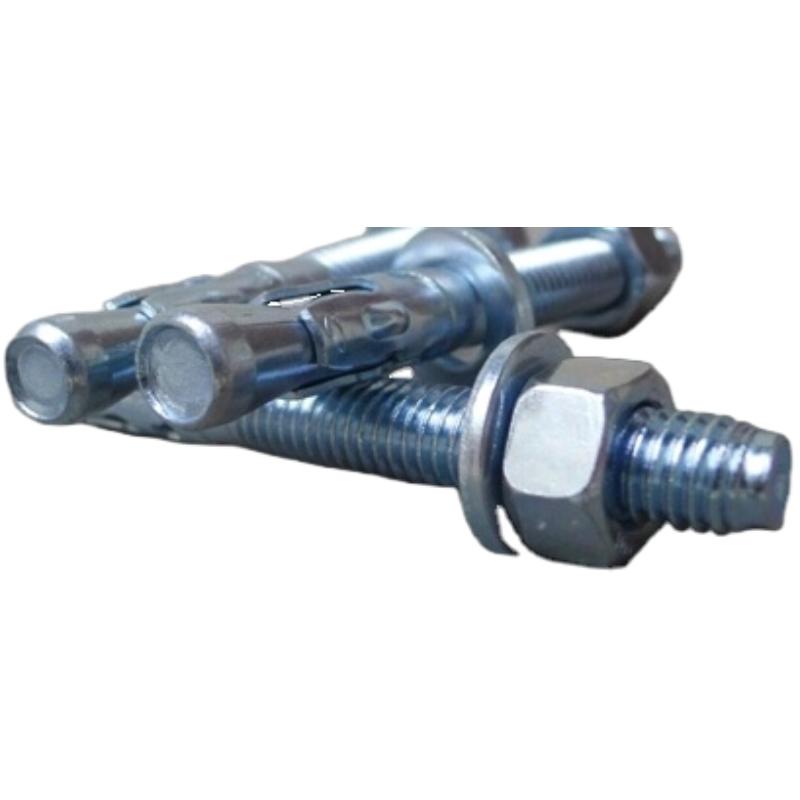
Where they shine
- Structural/MEP: handrails, pipe supports, strut channels, equipment skids.
- Warehousing: pallet racking baseplates; quick installs, immediate loading.
- Renewables and light civil: in solid concrete foundations (not for hollow block).
Compared to chemical anchors, Expansion Bolt setups are faster, cleaner, and don’t wait on cure time. However, for edge distances or cracked concrete with seismic demands, verify design per ACI 318 Chapter 17.
Industry trend watch
We’re seeing more specifiers ask for ACI 355.2 or ETA/CE routes, batch traceability, and corrosion class choices. Surprisingly, QR‑coded bags and torque‑tension cards are becoming standard on big projects.
Vendor snapshot (real‑world differences)
| Vendor | Certs | Lead time | Customization | Notes |
| Yongnian (Hebei) maker | ISO 9001; RoHS plating; test to ASTM/ACI | ≈15–25 days | Sizes, finish, packaging, OEM marks | Factory direct; broad M6–M24 range |
| Generic importer A | Basic QA docs | Stock‑dependent | Limited | Cheapest, but variable traceability |
| EU brand B | ETA options; extensive test data | 2–6 weeks | Moderate | Premium pricing; top documentation |
Installation notes and feedback
Drill to the right diameter, clean the hole (blow/brush/blow—contractors skip this too often), hammer the Expansion Bolt home, then torque to spec. Users report consistent “bite” and fewer spin‑outs when holes are cleaned and embedment is respected.
Mini case study
A North China warehouse retrofit used ≈200 sets of M12×100 zinc‑plated wedge anchors for racking. According to the site lead, install time dropped about 30% vs. their previous chemical solution, and QA was simpler—torque checks instead of cure cards. Simple, but effective.
Customization checklist
- Finish: zinc vs. hot‑dip galvanizing for coastal sites.
- Length/diameter tailoring; embedment targets.
- Head markings, batch codes, torque cards, OEM boxes.
Standards and references: 1) ACI 355.2 (mechanical anchor qualification), 2) ASTM E488/E488M (tension/shear tests), 3) ACI 318 Chapter 17 (design in concrete), 4) ISO 898‑1 (mechanical properties of fasteners), 5) ISO 9227 (neutral salt spray).
- ACI 355.2-19: Qualification of Post-Installed Mechanical Anchors in Concrete
- ASTM E488/E488M-18: Strength of Anchors in Concrete
- ACI 318-19: Building Code, Chapter 17 Anchoring to Concrete
- ISO 898-1:2013 Mechanical properties of fasteners
- ISO 9227:2017 Corrosion tests in artificial atmospheres — Salt spray tests
-
Guide to Calculating the Best Expansion Anchor Bolt Length
NewsApr.16,2026
-
Guide to the Correct Drill Size for 3 8 Wedge Anchor Installation
NewsApr.09,2026
-
Comprehensive Guide to Dottie Wedge Anchor Selection and Installation
NewsApr.07,2026
-
Comprehensive Guide to Ceiling Wedge Anchors for Secure Installations
NewsApr.04,2026
-
Understanding the Versatility and Applications of Carbon Steel Wedges
NewsMar.31,2026
-
The Essential Guide to Bolt Wedges Strength and Application
NewsMar.28,2026
 English
  Bengali
  Bulgarian
  Catalan
  Czech
Czech  French
  German
  Hindi
Hindi  Hungarian
  Italian
  Kazakh
  Korean
  Portuguese
  Romanian
  Slovak
  Somali
  Spanish
  Turkish


