


Mar . 06, 2026 03:15 Back to list
Comprehensive Guide to the 7452sd1 for Industrial Automation and Robotics
Understanding the 7452sd1: A Comprehensive Guide
The 7452sd1 represents a crucial component within industrial automation and robotics, specifically relating to advanced motor control and driver systems. Often used in conjunction with CNC machines, 3D printers, and robotic arms, understanding its specifications and applications is vital for engineers, technicians, and hobbyists alike. This article will explore the key features, benefits, and considerations when working with the 7452sd1, offering a detailed overview for optimal implementation. Whether you're upgrading an existing system or building a new one, this guide will provide valuable insights. You can find compatible products and solutions at YT Bolt.
Key Features of the 7452sd1 Driver
The 7452sd1 is a sophisticated driver designed for precise and efficient control of stepper motors and servo motors. Its core features include a high-resolution micro-stepping capability, allowing for smooth and accurate movements, minimizing noise and vibration. It supports various communication protocols, such as pulse/direction and serial communication (RS485), offering flexibility in system integration. The driver also incorporates advanced protection mechanisms, including over-current, over-voltage, and over-temperature safeguards, ensuring reliable operation. Its compact design and efficient heat dissipation make it suitable for a wide range of applications. Consider YT Bolt for sourcing high-quality, compatible components.
Key Highlights: High-resolution micro-stepping for smooth movements, supports various communication protocols, and incorporates advanced protection mechanisms for reliable operation.
Understanding Micro-Stepping with the 7452sd1
Micro-stepping is a technique that allows a stepper motor to move in smaller increments than its full-step size. The 7452sd1 excels in this area, offering selectable micro-stepping resolutions – 1/2, 1/4, 1/8, 1/16, and even higher in some configurations. Higher micro-stepping provides smoother movements and reduces resonance, but also decreases torque. Choosing the right micro-stepping resolution depends on the application’s requirements. For applications requiring high precision, such as 3D printing, higher micro-stepping is preferred. For higher torque applications, lower micro-stepping is more suitable. The 7452sd1’s flexibility allows for optimal performance across diverse applications.
Micro-Stepping Benefits:
• Smoother movements and reduced vibration
• Increased resolution and precision
• Reduced noise during operation
• Enhanced system performance
7452sd1 vs. Alternative Motor Drivers: A Comparison
Compared to simpler stepper motor drivers, the 7452sd1 offers several advantages, including its advanced micro-stepping capabilities, robust protection features, and flexible communication options. While basic drivers may suffice for simple applications, the 7452sd1 provides superior performance and reliability for demanding tasks. Servo motor drivers often offer closed-loop control, which the 7452sd1 doesn't directly provide but can be integrated with through external encoders. The 7452sd1 strikes a balance between performance, cost, and ease of use, making it a popular choice for a wide range of projects. YT Bolt offers a curated selection of drivers to help you choose the right solution.
Applications of the 7452sd1 Across Various Industries
The 7452sd1 finds application in a diverse range of industries, including CNC machining, 3D printing, robotics, and automation. In CNC machines, it provides precise control of axes for accurate cutting and engraving. 3D printers utilize it for controlling extruder movements and achieving high-resolution prints. Robotic arms benefit from its smooth and controlled movements for tasks requiring precision and repeatability. Automation systems leverage the 7452sd1 for controlling various actuators and mechanisms. YT Bolt provides solutions tailored to these industries.
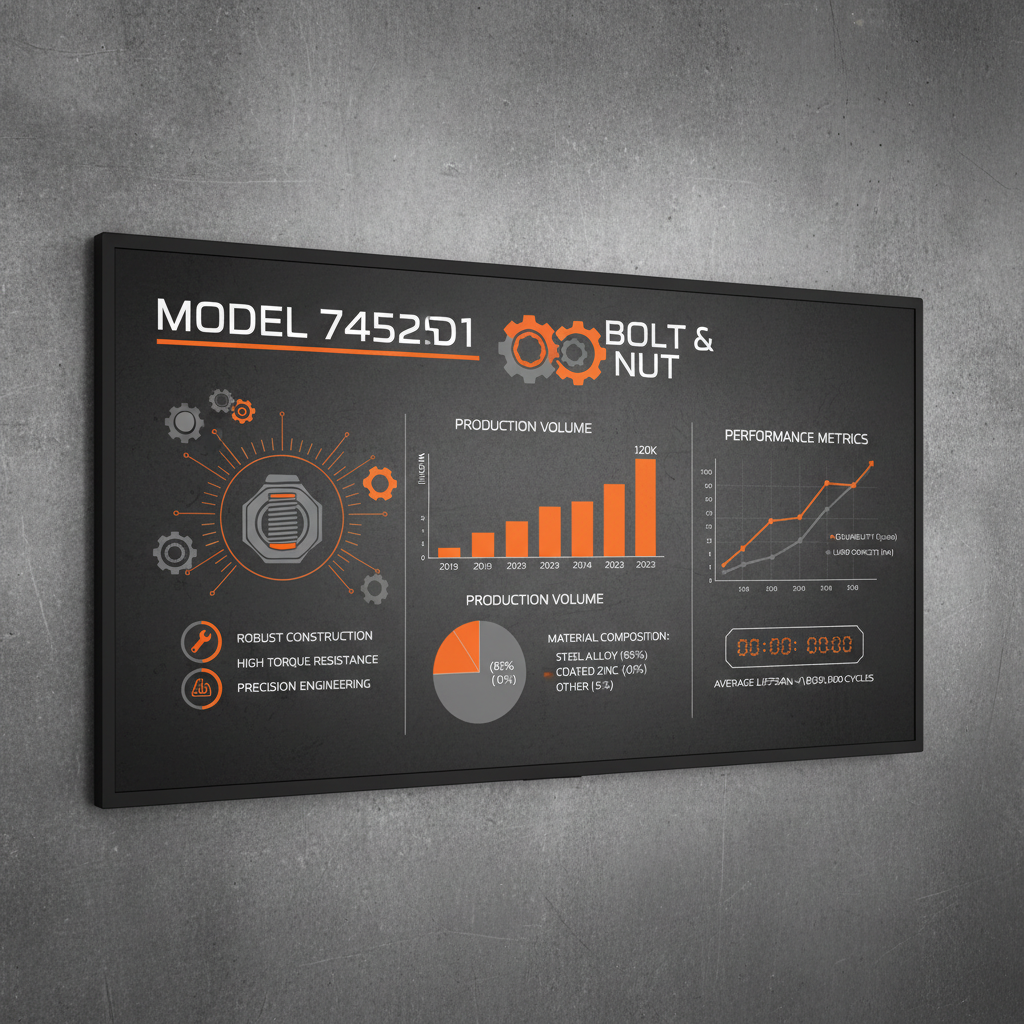
7452sd1 Technical Specifications & Considerations
Understanding the technical specifications is crucial for successful implementation. The 7452sd1 typically supports a wide voltage range (e.g., 12-48V DC), and can deliver continuous current up to several amps (check the datasheet for exact values). Key considerations include proper heat sinking, appropriate power supply selection, and careful wiring to avoid noise and interference. Always refer to the manufacturer's datasheet for detailed specifications and safety guidelines.
Conclusion: Empowering Precision with the 7452sd1
The 7452sd1 is a powerful and versatile motor driver that provides the precision and reliability needed for a wide range of applications. Its advanced features, combined with its relatively simple implementation, make it an excellent choice for both professionals and hobbyists. Explore the full range of compatible components and solutions at YT Bolt and unlock the full potential of your projects.
Frequently Asked Questions (FAQs)
What type of motor can the 7452sd1 drive?
The 7452sd1 is primarily designed for driving both stepper motors and servo motors. It supports a variety of motor types within its voltage and current ratings. When selecting a motor, ensure its voltage and current requirements are compatible with the driver’s specifications. Furthermore, consider the motor's inductance and resistance, as these factors can impact performance. For optimal results, consult the motor and driver datasheets to ensure compatibility.
How do I connect the 7452sd1 to a microcontroller?
The 7452sd1 can be connected to a microcontroller using various communication protocols, primarily pulse/direction or serial communication (RS485). For pulse/direction, you'll need to connect the microcontroller’s digital output pins to the driver's PUL (pulse) and DIR (direction) inputs. For RS485, you'll use a serial communication library and connect the microcontroller’s RX/TX pins to the driver’s RS485 interface. The specific wiring and code implementation will depend on your microcontroller and programming language.
What safety precautions should I take when working with the 7452sd1?
Always disconnect the power supply before making any wiring connections. Ensure the driver is properly heat-sinked to prevent overheating. Avoid short circuits and reverse polarity connections. Use appropriate wire gauges for the current requirements. Be aware of the voltage levels and potential hazards associated with working with electrical components. Always refer to the manufacturer's datasheet for specific safety guidelines and recommendations.
Can I use the 7452sd1 with a 5V microcontroller?
Yes, the 7452sd1 is generally compatible with 5V microcontrollers. However, ensure that the logic levels of the microcontroller's output pins are compatible with the driver's input requirements. If necessary, use level shifters to convert the 5V logic levels to the appropriate voltage for the driver. This prevents potential damage to the driver and ensures reliable operation.
-
Guide to Calculating the Best Expansion Anchor Bolt Length
NewsApr.16,2026
-
Guide to the Correct Drill Size for 3 8 Wedge Anchor Installation
NewsApr.09,2026
-
Comprehensive Guide to Dottie Wedge Anchor Selection and Installation
NewsApr.07,2026
-
Comprehensive Guide to Ceiling Wedge Anchors for Secure Installations
NewsApr.04,2026
-
Understanding the Versatility and Applications of Carbon Steel Wedges
NewsMar.31,2026
-
The Essential Guide to Bolt Wedges Strength and Application
NewsMar.28,2026
 English
  Bengali
  Bulgarian
  Catalan
  Czech
Czech  French
  German
  Hindi
Hindi  Hungarian
  Italian
  Kazakh
  Korean
  Portuguese
  Romanian
  Slovak
  Somali
  Spanish
  Turkish


