


Sep . 15, 2025 09:00 Back to list
DIN 975 Threaded Rods: High-Strength & Metric Fasteners
The Indispensable Role of DIN 975 Threaded Rods in Modern Engineering
In industrial fastening, a reliable and standardized solution is paramount. The DIN 975 threaded rod stands as a cornerstone, providing robust and versatile fastening capabilities across a myriad of sectors. Defined by the German Institute for Standardization (DIN), this standard specifies the dimensions, materials, and mechanical properties for threaded rods, ensuring consistency and interchangeability in critical applications. Unlike bolts, threaded rods are typically supplied in standard lengths (e.g., 1 meter, 2 meters, 3 meters) and are fully threaded along their entire length, allowing for custom cutting and adaptation to specific project requirements. Their utility spans from simple structural supports to complex machinery assemblies, making them an essential component in diverse engineering and construction projects.
Understanding the DIN 975 Standard: Precision and Performance
The `norma din 975` is a critical international benchmark that dictates the specifications for threaded rods. Specifically, it covers full-length threaded bars designed for fastening and anchoring. Adherence to this `din 975 standard pdf` ensures that manufacturers meet stringent quality and performance criteria, which is vital for structural integrity and safety. While often confused, it's important to differentiate `din 975 din 976`. `DIN 975` specifies full-thread rods, while `DIN 976` typically refers to stud bolts or partial threaded rods with specific unthreaded lengths and chamfered ends. Understanding `what is din 975` means recognizing its role in guaranteeing uniform dimensions, thread consistency, and material properties, which are crucial for reliable connections in demanding environments.
The standard outlines requirements for various material grades, including common industrial strengths like `din 975 8.8` and `din 975 10.9`, as well as lower grades like 4.8 and 5.8, each suited for different load-bearing capacities and environmental conditions. This rigorous standardization minimizes the risk of component failure and facilitates global supply chain interoperability.
Manufacturing Process Flow of DIN 975 Threaded Rods
The production of a high-quality din975 threaded rod involves a precise series of steps, ensuring metallurgical integrity and dimensional accuracy. Our manufacturing process emphasizes strict quality control at each stage, adhering to international standards like ISO 9001.
1. Raw Material Selection
We begin with selecting premium-grade steel wire rods. For grades such as `din 975 8.8` and `din 975 10.9`, high-carbon alloy steels (e.g., 35CrMo, 40Cr) or medium carbon steels (e.g., 35#/45#) are chosen, ensuring the requisite mechanical properties. Lower grades like 4.8 and 5.8 often use low carbon steel (e.g., Q235, 1008). Materials are sourced from certified suppliers and undergo rigorous chemical composition analysis.
2. Wire Rod Pre-treatment and Drawing
The raw wire rods are pre-treated to remove impurities and oxides, typically through pickling and rinsing. They are then cold-drawn through a series of dies to achieve the precise diameter required for the subsequent threading process. Cold drawing improves tensile strength and surface finish.
3. Thread Rolling
Instead of traditional thread cutting, we primarily employ cold thread rolling. This process involves pressing the blank rod between hardened dies, which form the threads by displacing material rather than removing it. Thread rolling work-hardens the material in the thread root, significantly increasing its fatigue strength and service life, making the rod more durable and corrosion-resistant compared to cut threads. This technique also offers energy saving benefits by reducing material waste.
4. Heat Treatment (for High-Strength Grades)
For high-strength grades like `din 975 8.8` and `din 975 10.9`, controlled heat treatment—quenching and tempering—is critical. This process optimizes the microstructure of the steel, imparting the necessary hardness, tensile strength, and toughness required for demanding applications. Precise temperature control and quenching media are vital to achieve the specified mechanical properties.
5. Surface Finishing
Depending on the application, rods may undergo various surface treatments to enhance corrosion resistance and aesthetics. Common finishes include:
- Plain/Black Oxide: For indoor use or when additional coating is applied by the end-user.
- Electro-galvanizing (Zinc Plating): Offers basic corrosion protection in mild environments.
- Hot-Dip Galvanizing: Provides superior corrosion resistance for outdoor and harsh industrial environments, crucial for long service life.
- Specialty Coatings: Such as PTFE (Teflon) for chemical resistance or Dacromet/Geomet for enhanced anti-corrosion properties.
6. Quality Control and Testing
Each batch undergoes stringent quality inspections, including dimensional checks (thread gauge, length, diameter), mechanical property testing (tensile strength, yield strength, hardness, elongation), and surface finish assessment. Our testing standards comply with ISO (e.g., ISO 898-1 for mechanical properties of fasteners) and ANSI, ensuring every din975 threaded rod meets or exceeds the specified requirements.
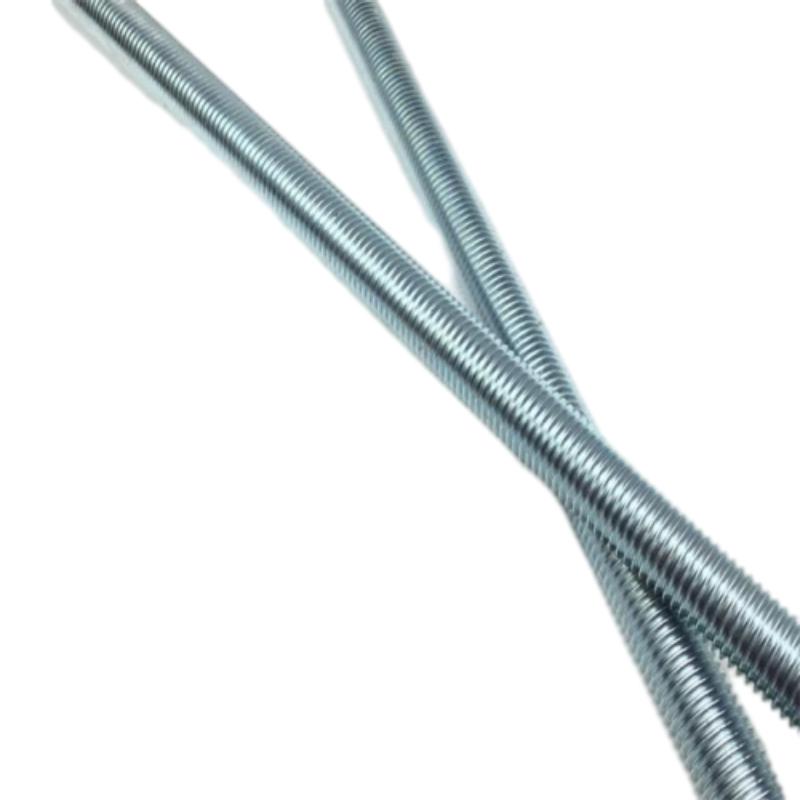
Key Technical Specifications and Grades of DIN 975 Threaded Rods
The versatility of the din975 threaded rod stems from its adherence to specific technical parameters and availability in various strength grades. These grades dictate their suitability for different load-bearing and environmental conditions.
Material Grades and Mechanical Properties:
| Property | Grade 4.8 | Grade 5.8 | Grade 8.8 (DIN 975 8.8) | Grade 10.9 (DIN 975 10.9) |
|---|---|---|---|---|
| Material (Typical) | Low Carbon Steel | Low Carbon Steel | Medium Carbon Steel, Quenched & Tempered | Alloy Steel, Quenched & Tempered |
| Tensile Strength (min.) | 400 MPa | 500 MPa | 800 MPa | 1000 MPa |
| Yield Strength (min.) | 320 MPa | 400 MPa | 640 MPa | 900 MPa |
| Hardness (Rockwell B/C) | B71-95 | B81-99 | C22-32 | C30-39 |
Dimensional Specifications:
- Diameter (Nominal Thread Size): M6 to M64 (common range, larger sizes available upon request).
- Length: Standard lengths include 1 meter, 2 meters, 3 meters. Custom lengths are frequently supplied based on project requirements.
- Thread Type: Metric coarse thread (e.g., M10x1.5). Metric fine thread options are also available for applications requiring finer adjustment or vibration resistance.
- Tolerances: Manufactured to precise DIN standards to ensure compatibility with standard metric nuts and washers.
Surface Finishes:
Our offerings include plain, zinc-plated (Cr3+ clear, yellow), hot-dip galvanized (HDG), black oxide, and specialized coatings like PTFE for enhanced chemical resistance or Dacromet for superior corrosion protection.
Industry Trends and Innovation in Threaded Rod Manufacturing
The market for industrial fasteners, including the din975 threaded rod, is continually evolving. Key trends include a heightened focus on sustainability, advanced material science, and intelligent manufacturing processes. There's a growing demand for threaded rods made from recycled content and produced through energy-efficient methods. Furthermore, the integration of automation and real-time quality monitoring in production lines ensures greater consistency and reduces waste, aligning with Industry 4.0 principles.
Innovations are also driving the development of specialized coatings, offering enhanced performance in extreme conditions such as high temperatures, highly corrosive environments, or applications requiring specific dielectric properties. The push for higher strength-to-weight ratios leads to continued research into new alloy compositions, particularly for applications like aerospace and high-performance automotive. Digitalization of supply chains, including robust inventory management and traceability systems, is also becoming standard, offering greater transparency and reliability to B2B clients.
Application Scenarios and Target Industries
The versatility and robust nature of the din975 threaded rod make it an indispensable component across a broad spectrum of heavy industries. Its ability to be cut to length and accept nuts on both ends allows for flexible and strong connections in various structural and mechanical assemblies.
Target Industries:
- Construction and Infrastructure: Used extensively for anchoring, concrete formwork, suspension systems (e.g., HVAC ducts, sprinkler systems), tunnel construction, and as foundation bolts. Grades like `din 975 8.8` and `din 975 10.9` are crucial for load-bearing structures.
- Petrochemical and Chemical Plants: Essential for pipe hangers, support systems, and flange connections where high strength and corrosion resistance (e.g., HDG or PTFE-coated rods) are critical due to aggressive chemical environments.
- Power Generation (Traditional and Renewable): Employed in power plant construction, wind turbine assembly (foundations, tower sections), and solar panel mounting structures, demanding high-strength materials resistant to environmental stressors.
- Metallurgy and Heavy Machinery: Used in the assembly of large industrial equipment, conveyor systems, and structural components in steel mills and foundries, where robust and durable fasteners are a must.
- Water Supply & Drainage Systems: For pipe support, bridge construction over waterways, and wastewater treatment plants, often requiring excellent corrosion resistance from finishes like hot-dip galvanizing.
- Marine and Offshore Applications: In marine structures and vessels, demanding materials with extreme corrosion resistance against saltwater and harsh weather conditions.
Typical Application Advantages:
Our threaded rods offer superior performance in these scenarios:
- Energy Saving: By allowing on-site cutting and customization, minimizing waste and reducing the need for multiple fixed-length fasteners.
- Corrosion Resistance: Through advanced coatings like hot-dip galvanizing or PTFE, significantly extending service life in harsh environments, reducing maintenance costs.
- Structural Integrity: High-strength grades ensure secure anchoring and load distribution, critical for safety in large-scale constructions.
- Flexibility: Full-length threads allow for adjustable connections, crucial for precise alignment and future modifications in complex assemblies.
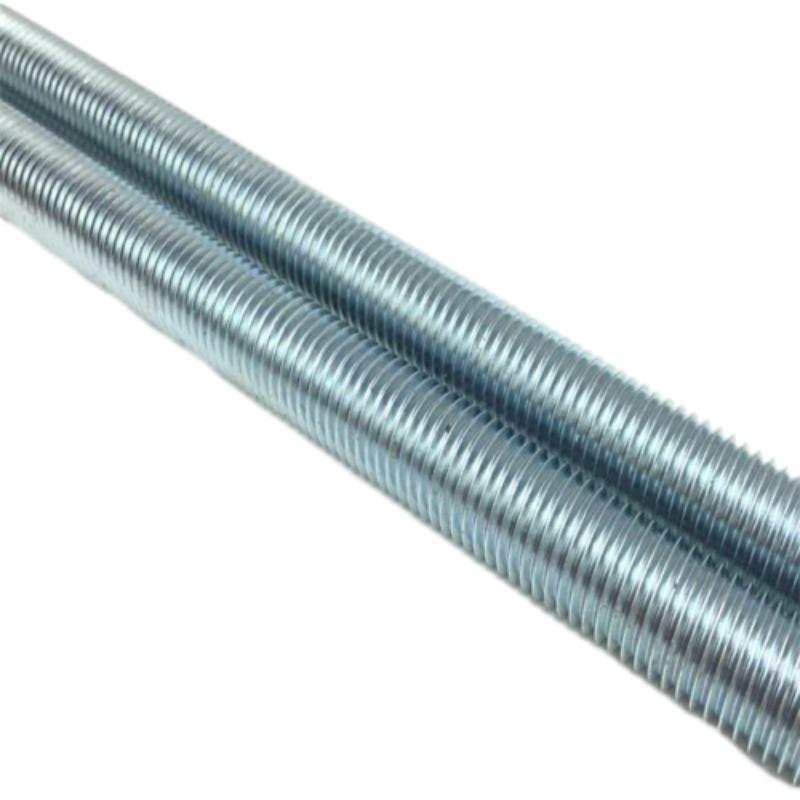
Technical Advantages of Our DIN 975 Threaded Rods
Our commitment to precision engineering and quality manufacturing provides distinct technical advantages for our din975 threaded rod products:
- Superior Material Traceability: We maintain full traceability of raw materials, ensuring that each rod’s origin and composition can be verified, which is crucial for compliance and performance verification.
- Consistent Mechanical Properties: Through precise heat treatment and advanced manufacturing, our rods consistently meet or exceed the specified tensile and yield strengths for `din 975 8.8` and `din 975 10.9` grades, guaranteeing reliable structural performance.
- Optimized Thread Geometry: Our cold thread rolling process produces threads with superior surface finish and increased root strength, significantly enhancing resistance to fatigue and stress concentration. This contributes to a longer extended service life in dynamic applications.
- Enhanced Corrosion Protection: Our range of surface finishes, especially hot-dip galvanizing and specialized coatings, provides excellent protection against environmental degradation, extending the operational lifespan and reducing maintenance frequency in aggressive climates.
- Dimensional Accuracy: Strict adherence to DIN 975 standards ensures optimal fit and compatibility with standard metric nuts and washers, preventing issues during assembly and ensuring secure connections.
- Cost-Effectiveness Through Durability: The robustness and longevity of our threaded rods translate into lower lifecycle costs for our clients, reducing the need for premature replacements and associated labor.
Vendor Comparison and Our Differentiators
Choosing the right supplier for din975 threaded rod is critical for project success and long-term reliability. We differentiate ourselves through a steadfast commitment to quality, customer service, and technical expertise.
Key Differentiators:
- Certifications and Compliance: We hold ISO 9001 certification for quality management and ensure our products meet or exceed international standards like DIN, EN, and ASTM. Our adherence to the `din 975 standard pdf` is independently verified.
- Extensive Experience: With over two decades of experience in the fastener industry, we possess deep technical knowledge and a proven track record of supplying critical components to major industries.
- Strategic Partner Clients: Our portfolio includes collaborations with leading EPC companies and manufacturers in petrochemical, energy, and construction sectors, testifying to our reliability and product quality.
- Comprehensive Customization: Beyond standard products, we offer extensive customization options, from unique lengths and diameters to specialized materials and coatings, tailored to specific project needs.
- Dedicated Technical Support: Our team of engineers provides expert guidance from specification to application, ensuring clients select the optimal solution for their requirements.
- Efficient Logistics & Supply Chain: We leverage a robust global supply chain to ensure timely delivery and consistent product availability, minimizing project delays.
Vendor Comparison Table (Illustrative):
| Criterion | Our Company | Competitor A (Large Distributor) | Competitor B (Small Manufacturer) |
|---|---|---|---|
| Material Traceability | Full, certified | Batch-level | Limited |
| Customization Capability | Extensive (materials, coatings, lengths) | Standard lengths/grades only | Basic (lengths) |
| Certifications | ISO 9001, CE, specific material certs | ISO 9001 | None specified |
| Technical Support | Dedicated engineering team | Basic sales support | Limited |
| Average Lead Time (Custom) | 2-4 weeks | 4-8 weeks (if offered) | Unpredictable |
Customized Solutions for Specialized Projects
Recognizing that standard specifications may not always meet unique project demands, we offer comprehensive customized solutions for din975 threaded rod requirements. Our engineering team collaborates closely with clients to develop tailor-made products that perfectly align with intricate design and performance criteria.
Customization options include:
- Non-standard Lengths and Diameters: Beyond typical metric sizes, we can produce rods to exact length and diameter specifications, minimizing waste and simplifying on-site assembly.
- Special Material Grades: While `din 975 8.8` and `din 975 10.9` are common, we can source and manufacture from specialized alloys (e.g., stainless steels like 304/316, duplex steels) for extreme corrosion, temperature, or strength requirements.
- Advanced Coatings: Applying bespoke coatings such as Xylan, Zinga, or ceramic coatings for specific chemical resistance, anti-galling properties, or electrical insulation.
- Unique Threading Profiles: While metric coarse is standard, fine-pitch threads or other specific thread forms can be engineered for precision applications.
- Specific Testing and Documentation: Providing additional certifications, non-destructive testing (NDT), or detailed material test reports (MTRs) as required by project specifications.
Our agile manufacturing capabilities and robust supply chain allow us to deliver custom solutions efficiently, supporting projects that require specialized, high-performance fasteners.
Application Case Studies: Real-World Performance
Our din975 threaded rod products have been successfully deployed in numerous demanding projects globally, demonstrating their reliability and performance.
Case Study 1: Petrochemical Plant Expansion, Middle East
Challenge: A major petrochemical facility required secure and corrosion-resistant pipe support systems for new processing units operating with highly corrosive chemicals and high temperatures. Standard fasteners showed premature degradation in initial tests.
Solution: We supplied thousands of custom-length `din 975 8.8` threaded rods, hot-dip galvanized and further coated with a specialized PTFE layer. This combination provided robust mechanical strength and exceptional resistance to both atmospheric and chemical corrosion.
Result: The tailored solution extended the expected service life of the pipe support system by over 50% compared to initial estimates, significantly reducing maintenance frequency and associated costs, saving the client an estimated $1.5 million in the first five years.
Case Study 2: High-Rise Building Construction, Urban Center
Challenge: A new skyscraper project required high-strength anchoring for its foundation and structural steel framework. The fasteners needed to withstand extreme shear and tensile forces, ensuring long-term stability and safety.
Solution: We provided custom-cut `din 975 10.9` threaded rods with a specific length and thread tolerance for critical anchoring points. Each rod was supplied with full material traceability and performance certifications.
Result: The high-strength rods ensured the structural integrity of the building, meeting stringent safety codes and providing peace of mind to engineers and developers. The precise dimensions expedited installation, contributing to a 10% reduction in assembly time for critical structural elements.
Frequently Asked Questions (FAQ)
Q1: What is the primary difference between `DIN 975` and `DIN 976`?
A1: `DIN 975` refers specifically to full-threaded rods, meaning the threading runs continuously along the entire length of the bar. In contrast, `DIN 976` (or `DIN 976-1`) specifies stud bolts, which typically have threads on both ends with an unthreaded body in the middle, and usually include chamfered ends. While both are used for fastening, their design and application contexts differ, hence the keyword `din 975 976` highlights this distinction.
Q2: How do I select the correct grade (e.g., `din 975 8.8` vs. `din 975 10.9`) for my application?
A2: The grade selection depends primarily on the required tensile strength and yield strength for your load-bearing application. `DIN 975 8.8` offers a minimum tensile strength of 800 MPa and a yield strength of 640 MPa, suitable for general structural and machinery applications. `DIN 975 10.9` provides higher strength with a minimum tensile strength of 1000 MPa and a yield strength of 900 MPa, ideal for heavy-duty, high-stress applications where maximum load capacity and resistance to deformation are critical. Consult with our technical team to match the grade precisely to your engineering specifications.
Q3: What surface finishes are available and what are their benefits?
A3: We offer plain (self-color), electro-galvanized (zinc plated), hot-dip galvanized (HDG), and various specialized coatings (e.g., PTFE, Dacromet). Plain finish is for indoor, non-corrosive environments or when post-installation painting/coating is planned. Zinc plating offers basic corrosion resistance. HDG provides superior long-term corrosion protection for outdoor and harsh industrial environments. Specialty coatings are for extreme conditions, such as chemical exposure, high temperatures, or specific friction requirements.
Q4: What is your typical lead time for custom orders of din975 threaded rod?
A4: Lead times for custom orders can vary based on complexity, material availability, and order volume. For standard customizations (e.g., specific lengths, common coatings), typical lead times range from 2 to 4 weeks. Highly specialized materials or intricate treatments may require longer. We provide estimated lead times upon receiving your detailed specifications and work diligently to meet project deadlines.
Q5: How can I obtain a `din 975 pdf` or `din 975 standard pdf` for reference?
A5: The official `din 975 pdf` standard document can be purchased from authorized standardization bodies or their resellers, such as DIN e.V. itself or national standards organizations. These documents are typically copyrighted and not freely distributed. However, our technical sales team can provide guidance and assist with specific standard interpretations related to our products.
Lead Time, Warranty, and Customer Support
Our commitment extends beyond product delivery to comprehensive customer satisfaction. We strive for transparency in all aspects of our service delivery:
- Lead Time & Fulfillment: For standard din975 threaded rod products, we maintain robust inventory levels to ensure rapid dispatch, typically within 3-7 business days. Custom orders are managed with clear communication regarding production timelines and delivery schedules. Our logistics team works to optimize shipping to meet your project deadlines efficiently.
- Warranty Commitments: All our products are backed by a comprehensive warranty, guaranteeing freedom from defects in material and workmanship under normal use conditions. Specific warranty periods and terms are detailed in our sales agreements and reflect our confidence in product quality and adherence to `din 975 threaded rod standard`.
- Customer Support: Our dedicated customer service and technical support teams are available to assist with product selection, technical specifications, order inquiries, and after-sales support. We provide prompt responses and expert advice to ensure seamless integration of our fasteners into your projects.
Conclusion
The din975 threaded rod remains a fundamental element in modern industrial fastening, offering unmatched versatility, strength, and reliability when manufactured to the highest standards. Our dedication to quality, adherence to international specifications, and customer-centric approach ensure that we deliver not just a product, but a dependable solution engineered for the long term. Partner with us for fasteners that meet the challenges of today's complex engineering projects.
Authoritative References:
- DIN e.V. (German Institute for Standardization). DIN 975: Threaded rods.
- International Organization for Standardization (ISO). ISO 898-1: Mechanical properties of fasteners made of carbon steel and alloy steel – Part 1: Bolts, screws and studs.
- ASM International. (2000). ASM Handbook Volume 19: Fatigue and Fracture.
- ASTM International. (2018). A153/A153M: Standard Specification for Zinc Coating (Hot-Dip) on Iron and Steel Hardware.
-
Guide to Calculating the Best Expansion Anchor Bolt Length
NewsApr.16,2026
-
Guide to the Correct Drill Size for 3 8 Wedge Anchor Installation
NewsApr.09,2026
-
Comprehensive Guide to Dottie Wedge Anchor Selection and Installation
NewsApr.07,2026
-
Comprehensive Guide to Ceiling Wedge Anchors for Secure Installations
NewsApr.04,2026
-
Understanding the Versatility and Applications of Carbon Steel Wedges
NewsMar.31,2026
-
The Essential Guide to Bolt Wedges Strength and Application
NewsMar.28,2026
 English
  Bengali
  Bulgarian
  Catalan
  Czech
Czech  French
  German
  Hindi
Hindi  Hungarian
  Italian
  Kazakh
  Korean
  Portuguese
  Romanian
  Slovak
  Somali
  Spanish
  Turkish


