


Oct . 16, 2025 14:50 Back to list
Hex Head Sleeve Anchor | Heavy-Duty, Corrosion-Resistant
A field-tested look at the hex head sleeve anchor
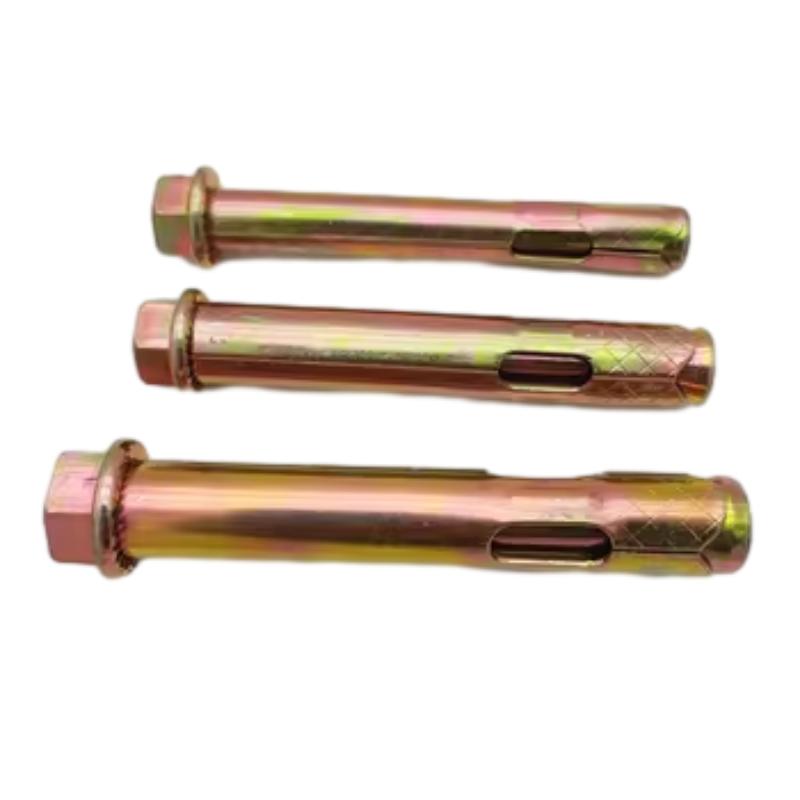
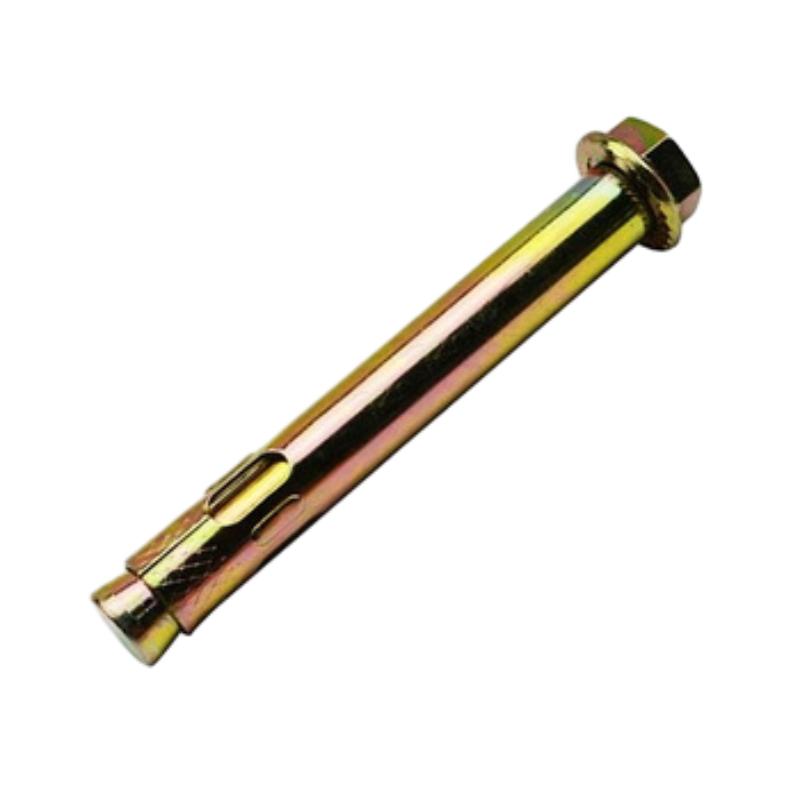
I’ve installed more anchors than I care to admit, and—truth be told—the workhorse on many job sites is the hex head sleeve anchor. It’s simple, predictable, and forgiving in real concrete. The model here (factory price carbon steel, yellow zinc, hex flange nut) comes out of Yongnian, Handan—China’s fastener heartland—and that pedigree matters when you want consistent batches, not surprises.
What’s trending (and why you should care)
Three shifts stand out: (1) specs moving toward cracked-concrete and seismic-qualified anchors; (2) greener plating—Cr3+ passivation, RoHS/REACH; (3) jobsite accountability—pull-test reports and QR-coded traceability. The hex head sleeve anchor still wins for light-to-medium loads in solid concrete and masonry because installation is fast and forgiving, and that counts when you’ve got 1,200 hangers to set by Thursday.
Core specifications (quick-glance)
| Parameter | Typical value |
|---|---|
| Material | Carbon steel (≈C1022) |
| Finish | Yellow zinc, Cr3+, ≈5–8 μm |
| Sizes | M6–M12; 1/4"–1/2" |
| Recommended base | Normal-weight concrete ≥ C20/25; solid brick |
| Hole size | Same as anchor diameter |
| Embedment (typ.) | ≈40–60 mm (real-world may vary) |
| Torque (M8 reference) | ≈15–20 N·m |
| Standards touchpoints | ISO 898-1; ISO 9227; ASTM E488/E488M; ACI 355.2 (test method) |
How it’s made (and checked)
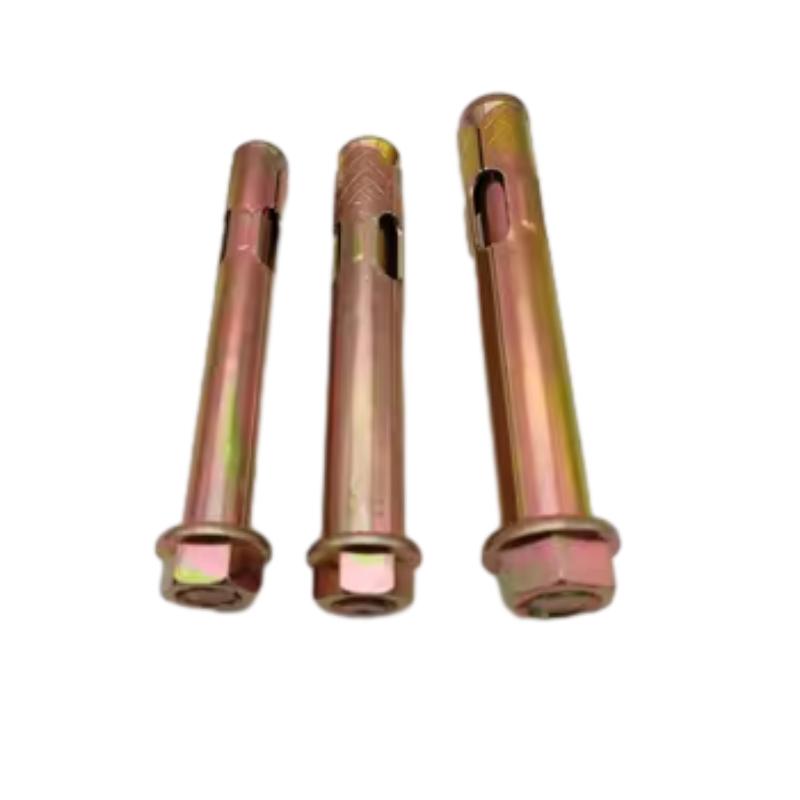
Materials: low-carbon steel wire rod → spheroidize anneal. Forming: cold heading of the bolt, sleeve roll-forming with expansion slots. Heat treat: controlled carburize/quench (where applicable) to achieve target hardness. Plating: yellow zinc (Cr3+), bake to mitigate hydrogen embrittlement for higher-strength parts. Assembly: sleeve + flat washer + expansion nut + hex flange nut. QC: thread gauges, sleeve expansion go/no-go, plating thickness (XRF), salt-spray.
Testing: static tension/shear per ASTM E488/E488M; on-site proof tests with 1.5× service load. Typical lab data in C30/37: M8 ultimate tension ≈ 10–12 kN, shear ≈ 8–10 kN; safety factor by design standard. Service life indoors: ≈10–15 years; coastal outdoors with yellow zinc, consider topcoat or go HDG/SS.
Where it shines
MEP supports, cable trays, fire sprinkler hangers, racking, signboards, light steel frames, equipment skids, handrails. Many customers say the hex head sleeve anchor is the “set-and-forget” choice when the substrate is decent and access is tight.
Vendor comparison (pragmatic view)
| Criteria | YT Bolt (Hebei) | Import Brand | Local Distributor |
|---|---|---|---|
| Lead time | ≈10–20 days | ≈30–60 days | Stock-dependent |
| Customization | High (sizes, finish, logo) | Medium | Low |
| Price level | Factory-direct | Premium | Mid |
| Docs & tests | COC, PPAP on request, pull-test data | Extensive | Basic |
A quick case from the field
Retrofit HVAC on a mall roof deck: 1,600 hangers in C25/30 concrete. Crew used M8 hex head sleeve anchor, 55 mm embedment. Average on-site proof load was ≈4.0 kN with no spin-outs (random N=20). Foreman’s note: “Drill, blow, brush, blow—then it bites. Fast.”
Customization: M6–M12, 1/4"–1/2", length to 120 mm; logo-stamped nuts; alternative finishes (clear zinc, mechanical zinc, HDG), and stainless 304/316 variants when corrosion bites harder. Packaging: small boxes with barcode or bulk—your call.
Factory and certifications
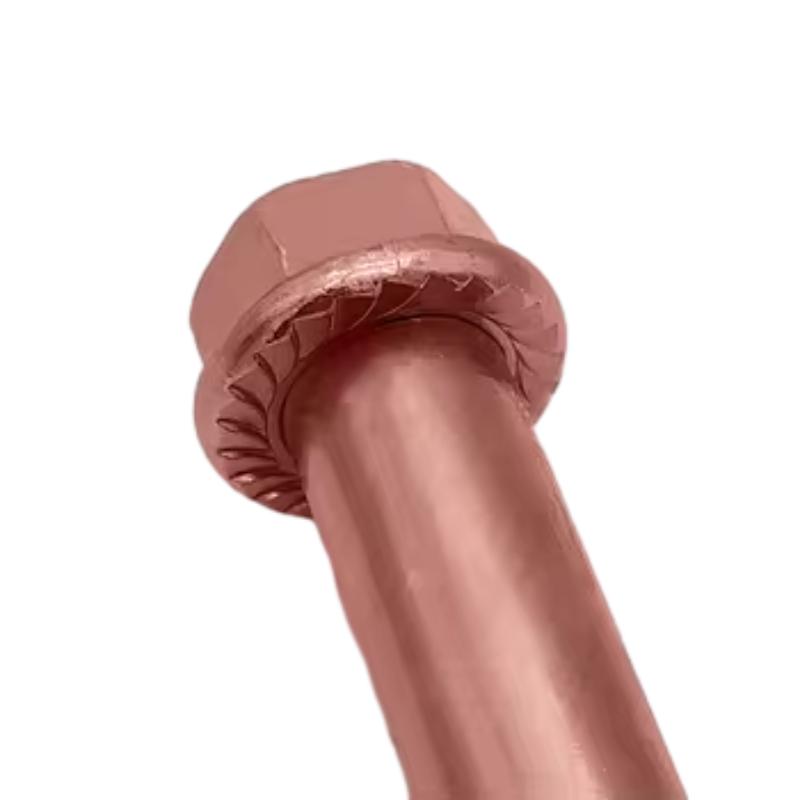
Origin: No. 40, Zhuoju Road, Dongmingyang Industrial Park, Mingguan Town, Yongnian District, Handan City, Hebei Province, China. Typical compliance portfolio: ISO 9001 QMS; RoHS/REACH for plating; salt-spray to ISO 9227; mechanical properties aligned with ISO 898-1. For critical jobs, request witnessed tests per ASTM E488/E488M or ACI 355.2 and project-specific ITPs.
References:
- ASTM E488/E488M – Standard Test Methods for Strength of Anchors in Concrete.
- ACI 355.2 – Qualification of Post-Installed Mechanical Anchors in Concrete.
- ISO 898-1 – Mechanical properties of fasteners made of carbon steel and alloy steel.
- ISO 9227 – Corrosion tests in artificial atmospheres (salt spray tests).
- EN 1992-4 – Design of fastenings for use in concrete.
-
Guide to Calculating the Best Expansion Anchor Bolt Length
NewsApr.16,2026
-
Guide to the Correct Drill Size for 3 8 Wedge Anchor Installation
NewsApr.09,2026
-
Comprehensive Guide to Dottie Wedge Anchor Selection and Installation
NewsApr.07,2026
-
Comprehensive Guide to Ceiling Wedge Anchors for Secure Installations
NewsApr.04,2026
-
Understanding the Versatility and Applications of Carbon Steel Wedges
NewsMar.31,2026
-
The Essential Guide to Bolt Wedges Strength and Application
NewsMar.28,2026
 English
  Bengali
  Bulgarian
  Catalan
  Czech
Czech  French
  German
  Hindi
Hindi  Hungarian
  Italian
  Kazakh
  Korean
  Portuguese
  Romanian
  Slovak
  Somali
  Spanish
  Turkish


