


Sep . 30, 2025 13:15 Back to list
Hex Bolt Sleeve Anchor—High Load, Corrosion-Resistant?
Fasteners Factory Wholesale Yellow Zinc Plated Hex Bolt Type Sleeve Anchor: Field Notes, Specs, and Real-World Use
If you work around concrete, you already know anchors can make or break a day on site. The hex bolt sleeve anchor we’ve been seeing from Northern China’s fastener hub feels like a solid, no-drama choice for mainstream structural fixings. It’s the familiar assembly—head bolt, expansion sleeve, flat washer, cone/expansion nut, and hex nut—dialed for repeatable performance and decent corrosion resistance. And yes, it’s the yellow zinc plated classic many maintenance teams still ask for.
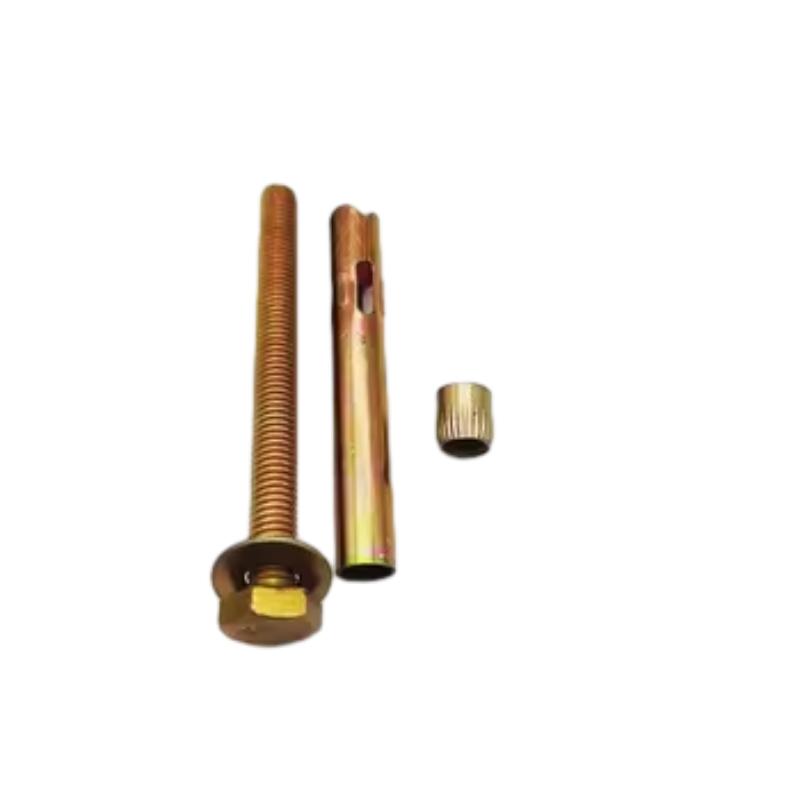
What’s trending in anchors (quick take)
- Shift toward tested systems compliant with EN 1992-4 and ACI 355.2 (inspection teams ask for paperwork).
- Yellow zinc remains popular indoors; outdoors, buyers lean hot-dip galvanized or stainless where budgets allow.
- Contractors want preassembled sets, clear drilling charts, and torque windows that work in the real world.
Technical snapshot
Origin: No. 40, Zhuoju Road, Dongmingyang Industrial Park, Mingguan Town, Yongnian District, Handan City, Hebei Province, China. Material typically medium carbon steel; property class around 5.8–8.8 for the bolt, sleeve in cold-formed steel; coating: yellow zinc (≈5–12 μm) per ISO 4042. In practice, I’ve seen consistent thread finish and predictable cone expansion—nothing flashy, but dependable.
| Parameter | Typical Spec (≈, real-world may vary) |
|---|---|
| Size Range | M6, M8, M10, M12, M16 |
| Drill Diameter | 6 / 8 / 10 / 12 / 16 mm |
| Min. Embedment | 35 / 40 / 50 / 60 / 70 mm |
| Bolt Property Class | 5.8 or 8.8 (ISO 898-1) |
| Coating | Yellow zinc ≈5–12 μm (ISO 4042) |
| Recommended Torque | M8 ≈ 15–20 Nm; M10 ≈ 30–40 Nm; M12 ≈ 50–70 Nm |
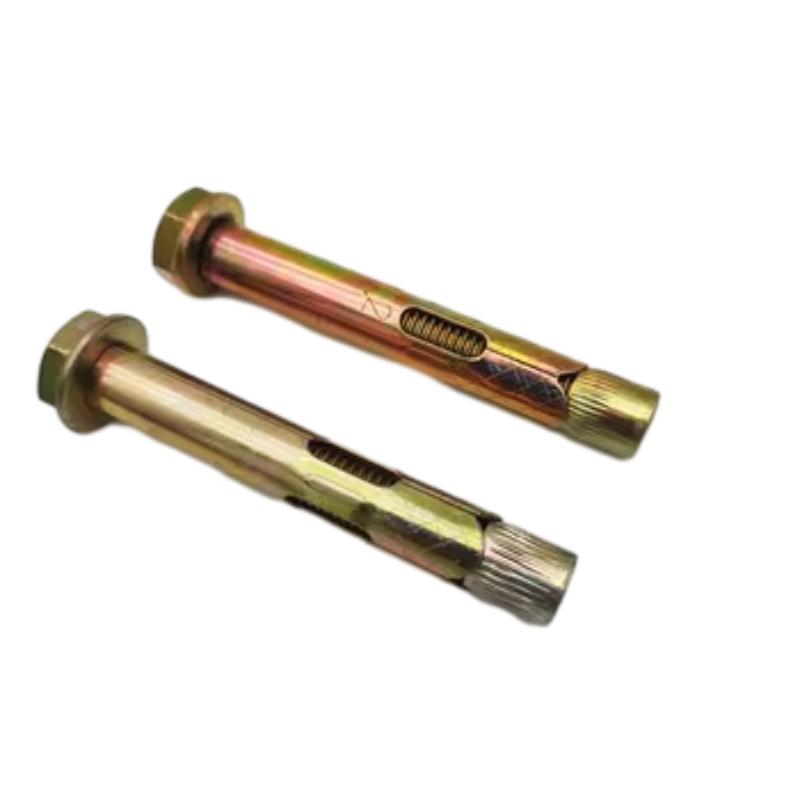
Process, testing, and service life
Manufacturing flow (simplified): wire drawing → cold heading (bolt, cone) → sleeve forming and slotting → thread rolling → heat treatment (as required) → plating → 100% visual + sample mechanical tests → packaging. Testing against ASTM E488/E488M and ACI 355.2 procedures is common; European buyers ask for EN 1992-4 method statements. Indoors (C1–C2 corrosion categories), yellow zinc units typically last 10–20 years; outdoors or damp zones, I’d upgrade coating or go stainless.
Small lab set, C30/37 concrete, edge distance ≥10d, 70 mm embedment (M12): mean tension ≈ 16.8 kN; mean shear ≈ 12.2 kN. Your mileage will vary with concrete strength, installation accuracy, and spacing/edge effects.
Where it’s used (and why)
- Racking, handrails, pipe supports, machinery bases.
- MEP brackets, façade subframes (non-cracked concrete preferred).
- Infrastructure ancillaries—barriers, sign bases, cable trays.
Advantages: quick install, forgiving hole tolerances, easy inspection. Many customers say the hex bolt sleeve anchor “just bites” even when the hole is a touch dusty—though, to be honest, cleaning the hole still matters.
Vendor landscape (pragmatic view)
| Vendor Type | Typical Certs/Docs | Lead Time | Customization | Cost Level |
|---|---|---|---|---|
| Factory-direct (Handan, CN) | Mill certs, ISO 9001; test reports on request | 10–25 days | Sizes, plating, logo, packaging | $ (economical) |
| Global premium brand | ETA, CE, extensive data | Stock/fast | Broad catalog options | $$$ |
| Local trader | Basic COA, variable | 2–7 days | Limited | $$ |
Customization and documentation
- Surface: yellow zinc, clear zinc, mechanical zinc, HDG, or stainless variants.
- Property class: 5.8/8.8; sleeve geometry tuned for cracked/non-cracked concrete.
- Packaging: site packs, QR install guides; logo stamping on head.
- Docs: material certs, salt-spray reports, and, where applicable, project-specific tests per ASTM E488 or ACI 355.2.
Two quick case notes
Manufacturing line retrofit (EU): M10 hex bolt sleeve anchor, 50 mm embedment, torque 35 Nm—zero slippage after 3-month vibration trial; installer noted “clean drilling and steady bite.”
Commercial railing (MEP corridor): M12 units in C30 concrete, indoor mildly humid; after 1 year, torque checks stayed within −10% of set values—acceptable drift.
Install tips (because it matters)
- Drill to diameter and depth; blow–brush–blow the hole.
- Insert preassembled anchor; hammer until washer seats.
- Torque to spec; re-check 10% of anchors per QA plan.
Note: For nuclear or seismic-critical work, follow project approvals and use anchors with the required assessments (e.g., EN 1992-4/ETA or ACI 355.2 qualified systems).
Citations: [1] ASTM E488/E488M; [2] ACI 355.2; [3] EN 1992-4; [4] ISO 898-1; [5] ISO 4042.
- ASTM E488/E488M-18, Standard Test Methods for Strength of Anchors in Concrete.
- ACI 355.2-19, Qualification of Post-Installed Mechanical Anchors in Concrete.
- EN 1992-4:2018, Design of fastenings for use in concrete.
- ISO 898-1:2013, Mechanical properties of fasteners—Bolts, screws and studs.
- ISO 4042:2022, Fasteners—Electroplated coatings.
-
Guide to Calculating the Best Expansion Anchor Bolt Length
NewsApr.16,2026
-
Guide to the Correct Drill Size for 3 8 Wedge Anchor Installation
NewsApr.09,2026
-
Comprehensive Guide to Dottie Wedge Anchor Selection and Installation
NewsApr.07,2026
-
Comprehensive Guide to Ceiling Wedge Anchors for Secure Installations
NewsApr.04,2026
-
Understanding the Versatility and Applications of Carbon Steel Wedges
NewsMar.31,2026
-
The Essential Guide to Bolt Wedges Strength and Application
NewsMar.28,2026
 English
  Bengali
  Bulgarian
  Catalan
  Czech
Czech  French
  German
  Hindi
Hindi  Hungarian
  Italian
  Kazakh
  Korean
  Portuguese
  Romanian
  Slovak
  Somali
  Spanish
  Turkish


